How to automate the scrubbing of your social media history using the Redact App
 Dan Saltman6 min read
Many of us have been there at one time or another, we reach that point with social media where we’ve simply had enough and decide it’s time to leave it behind. Many of us will return after a hiatus, some wont. One thing most of us share is that we do some level of scrubbing upon our exit.
Some of us will flat-out delete our social media accounts all together, others will selectively delete content post by post and comment by comment. The latter method, as you can imagine, is an enormous time sink. Imagine going through 5, 10, or even 20 year’s worth of social media posts, it will require an enormous amount of bandwidth.
Automate the social media scrubbing with Redact Software
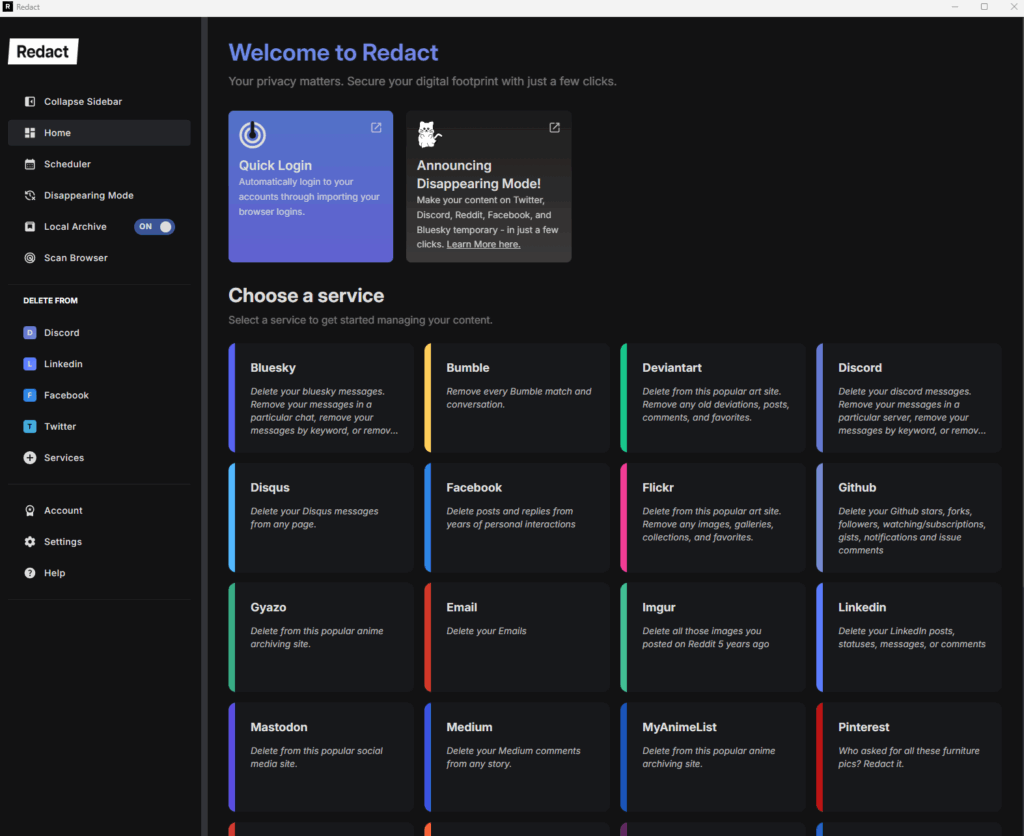
That’s right, we built a scrubbing tool that works with all major social media platforms. Our app can login to each of your social media accounts and hunt for very specific types of content to remove. This content is totally based off what you tell the program to look for. You can tell our app to go find any post where a specific keyword(s) is used, from a specific date or date-range, a specific type of content like an image or a music file, you can even have the app find and remove friends or old DMs.
Here are the social media sites our software works with:
Social Media Platforms
- Twitter/X
- Tumblr
- Bluesky
- Mastodon
- Quora
- Medium
- Yelp
- MyAnimeList
- Disqus
- Flickr
Messaging & Communication Platforms
- Discord
- Slack
- Telegram
- Microsoft Teams (enterprise only)
Dating Platforms
Content & Media Platforms
- Imgur
- DeviantArt
- Gyazo
- WordPress
- Stack Exchange
- GitHub
Work & Productivity Platforms
- Email (Gmail, Outlook, etc.)
- WordPress
- Stack Exchange
- GitHub
Redact.dev provides tools to delete various types of content, including posts, comments, messages, images, videos, likes, and more, depending on the platform. Features like keyword filtering, date range selection, and scheduled deletions offer granular control over data removal processes.
For more detailed information on each platform and the specific deletion capabilities, you can visit Redact.dev’s official Services page.
Types of content Redact can target for removal:
- Posts
- Likes
- Follows / Fans
- Retweets / Shares
- PMs / DMs
- Activity & History
- Images, videos, MP3s, PDFs, and other file types depending on platform
But what if I just want to mass delete all of it at once?
Some people would rather just delete all the content, but keep control of the account / username itself. For these people, they are likely looking for a solution that simply deletes every bit of content you have ever posted.
Our app can do that as well. Once you download the app, it’s all pretty self explanatory. For those who want a bit more detailed instructions, we have several YouTube videos that visually show you how to do various tasks.
Automated Social Media Scrubbing with Redact FAQ
What does automated scrubbing mean in the Redact app?
It means you set filters and schedules and Redact removes or hides matching posts, comments, likes, and media on a recurring basis without manual steps each time.
How do I connect platforms to Redact and start automation?
Open Redact, pick a platform from the sidebar, and sign in. Choose what to target, run a Preview, then save your filters and enable Schedule Deletion or Saved Runs.
What is the difference between Easy and Advanced setup in Redact?
Easy setup uses common presets such as All Time or Last 30 Days with simple filters. Advanced setup adds keyword lists, usernames, media types, and fine date windows.
Which content types can Redact target during automated runs?
Posts, comments, replies, direct messages where supported, likes and reactions, images, videos, files, and links. Options vary by platform.
How do I schedule recurring scrubs in Redact?
Save your filters, then choose a repeat option such as daily, weekly, or monthly. Pick a start time and Redact will run the same rules on that cadence.
Does Redact store my credentials or my data on Redact servers?
No. Redact runs on your device and uses the minimum access needed to perform actions that you approve. You can disconnect any service at any time.
Can I test my filters before any deletion happens?
Yes. Use Preview mode to see matches with no changes. Switch to Review & Delete to approve items, or to Deletion to remove all matches.
What filters should I use to reduce risk without losing good content?
Start with dates and keywords that reflect high risk topics. Add media type filters and locations. Keep whitelists for accounts or terms you want to preserve.
How does Redact handle rate limits or very large histories over time?
Redact batches actions and spaces requests to respect platform limits. For large archives, schedule recurring passes or use date slices for consistent results.
Can Redact alert me when an automated run finishes or needs attention?
Yes. Enable notifications. You can review a summary, open the log, and rerun a Preview for any items that were skipped.
Should I export my data before I enable automation on multiple platforms?
It is a good idea. Export a private archive where available. Store it offline or in encrypted storage in case you need a record of past activity.
What platforms can Redact automate for ongoing scrubs?
Redact supports many popular networks and forums. The exact actions vary by platform, such as posts and comments on one service and reactions or messages on another.
Is there a free option in Redact and when do I need Premium for automation?
You can start for free with recent history. Upgrade to Premium to run All Time scrubs and to unlock more advanced filters, scheduling, and multi platform coverage.
Can automation remove copies outside the original platform such as screenshots?
No. Automation affects the linked platform only. Screenshots and external caches can remain. Use takedown requests where possible.
How do I keep automation safe and reversible where possible in Redact?
Use Preview first, export data, start with Review & Delete, then switch to Deletion. Keep whitelists and review logs after each scheduled run.