Flying to the World Cup? US Customs Can Go Through Your Phone Before You See a Single Match.
 Dan Saltman15 min read
On this page
The 2026 FIFA World Cup runs from 11 June to 19 July across 11 US cities, three Canadian cities, and three Mexican cities. Around 1.2 million international visitors are expected to travel to the United States for the tournament alone, according to research firm Tourism Economics. For the vast majority of those fans, the trip will be straightforward. But for every international traveler arriving at a US port of entry, regardless of nationality, ticket status, or reason for travel, US Customs and Border Protection has the legal authority to search your phone, laptop, and other digital devices without a warrant and, in many cases, without any suspicion of wrongdoing.
Device searches at the US border hit a record 55,318 in 2025, up 17.6 percent from the year before, according to CBC News reporting on official CBP statistics. That number continues to rise. Understanding what CBP can and cannot do, what your rights are, and how the ESTA social media question works is practical preparation for anyone traveling to the US this summer, not a reason for alarm.
This guide covers both topics fully: the CBP border phone search rules and what they mean for you as a World Cup traveler, and the current state of the ESTA application’s social media requirements.
What Is CBP’s Legal Authority to Search Your Phone at the Border?
US Customs and Border Protection operates under what is known as the border search exception to the Fourth Amendment. Under this legal doctrine, the government has long held that the normal rules governing searches inside the United States do not apply in the same way at its borders and ports of entry. Courts have consistently upheld this exception. It applies to physical belongings, and CBP treats electronic devices (phones, laptops, tablets, cameras, USB drives, and external hard drives) as falling within that same category.
In January 2026, CBP updated its governing rules through CBP Directive 3340-049B. As immigration law firm Berardi Immigration Law explains in its breakdown of the updated directive, this does not fundamentally change the rules but clarifies exactly how CBP agents are expected to use their authority. The power is broad but it is not unlimited, and understanding where the lines are drawn matters for anyone traveling to the US.
This authority applies to all international travelers without exception. US citizens, visa holders, green card holders, and visitors traveling on ESTA are all subject to device inspection at ports of entry. The legal standard for what CBP needs before conducting a search, however, depends on the type of search involved.
The Two Types of CBP Phone Search: Basic and Advanced
CBP conducts two distinct types of device searches, and they operate under different legal standards.
A basic search is a manual review of what is stored on your device. An agent may scroll through your photos, read your text messages, check your call logs, open documents, and review emails. No external equipment or software is used. The critical point, confirmed by the updated 2026 directive, is that CBP does not need any suspicion whatsoever to conduct a basic search. They can request it from any traveler, at any time, at any port of entry. According to AllAboutCookies, basic searches are conducted with the phone in airplane mode, meaning agents are looking only at what is stored locally on the device itself.
An advanced search is a different matter entirely. This involves connecting your device to external forensic equipment to copy, extract, or analyse data. It is a substantially deeper level of access. According to both the CBP directive and Berardi Immigration Law’s analysis, an advanced search requires two things: reasonable suspicion that the traveler is involved in unlawful activity or a national security concern, and supervisory approval before the search proceeds. This is a meaningful procedural safeguard. Forensic extraction cannot happen on a whim.
In 2025, CBP conducted 50,922 basic searches and 4,396 advanced searches of electronic devices at US ports of entry: a combined record of 55,318 device searches, up 17.6 percent from 2024. Source: CBC News / CBP official statistics
Device search numbers have grown dramatically over the past decade. According to Pacific Legal Foundation research, the number of electronic device searches at US ports of entry more than quadrupled between 2015 and 2024, from approximately 8,500 to over 46,000. The upward trajectory has continued through 2025.
What CBP Cannot Do During a Border Phone Search
CBP’s authority has clear limits that are worth understanding in full, because some of the most commonly cited concerns about phone searches do not reflect the actual scope of what agents are permitted to do.
CBP cannot access your cloud data. This is confirmed explicitly in the updated 2026 directive. Agents may only search data that is physically stored on your device at the time of inspection. They cannot remotely access your iCloud account, Google Drive, Dropbox, or any other cloud-based storage, unless that data has already been downloaded and is sitting locally on your phone or laptop. If you have concerns about what is visible during a potential border search, one practical step is to ensure sensitive material is stored in cloud-only locations rather than downloaded to your device before travel.
CBP cannot conduct an advanced forensic search without reasonable suspicion and supervisor approval. As described above, the basic and advanced search categories carry different legal standards. The vast majority of device searches are basic searches. Advanced forensic extraction requires meeting a higher bar and following an internal approval process.
Data obtained is stored in a central system. This is a point worth being aware of. According to Pacific Legal Foundation’s policy analysis, data obtained from device searches can be shared with other government agencies and is stored in CBP’s Automated Targeting System for up to 15 years, or longer in certain circumstances. This applies to data obtained from any type of search.
Can You Refuse a CBP Phone Search at the Border?
This is where the answer becomes more nuanced depending on your citizenship status and travel situation.
For US citizens, the legal position is clear on the fundamental point that you have an absolute right to re-enter the United States, and that right cannot be conditioned on handing over your phone or passcode. As FindLaw’s analysis of current CBP rules confirms, US citizens cannot be denied entry for declining to unlock a device or share a passcode, even if officers take issue with their political views.
For non-US citizens and visitors traveling on ESTA or a visa, the situation is different. Refusing to comply with a CBP device search does not carry a legal obligation to comply, but it can have real practical consequences. CBP retains the authority to seize your device for further inspection, to detain you for questioning, and, in the case of foreign nationals, to use your refusal as a factor in making an admissibility determination. In plain terms, a non-citizen who refuses a device search at the border may be denied entry to the United States.
As Legal Examiner notes, civil liberties groups point out that while travelers may state they do not consent to a search, such objections do not necessarily prevent CBP from seizing or inspecting a device. Asserting your rights respectfully is advisable, but understanding the potential consequences is equally important, particularly for international visitors who have non-refundable travel plans for World Cup matches.
ESTA and Social Media: What the Current Rules Actually Say
If you are traveling to the US from one of the 42 countries eligible for the Visa Waiver Program, you will need an approved ESTA before boarding your flight. Countries currently eligible include the UK, most EU member states, Australia, Japan, South Korea, and New Zealand, among others. ESTA approval is valid for two years and multiple trips and should be applied for at least 72 hours before travel.
There has been significant coverage in recent months of a proposal to make social media disclosure mandatory on the ESTA application. Here is the position as of June 2026:
Social media disclosure on the current ESTA application is still optional. On 10 December 2025, CBP published a formal notice in the Federal Register proposing to make social media identifiers a mandatory field for all ESTA applicants, covering the previous five years of social media history. The public comment period ran for 60 days and closed on 9 February 2026. As of the time of publication, that proposal has not been finalized into a rule. The current ESTA application continues to ask for social media handles as an optional question. Applicants can still select “none” or leave it blank without automatic consequence.
You should check CBP and DHS channels for any final implementation. These requirements can change rapidly.
What is already true, regardless of the ESTA proposal’s status, is that CBP officers have the authority to ask about your social media accounts at the port of entry during an inspection. This is separate from the ESTA application process. An officer conducting a secondary inspection may ask for social media handles or request access to your accounts. This is not new authority and applies to all international travelers.
What ESTA Travelers Should Know About Social Media Before Traveling
Even under the current optional rules, there are practical considerations for ESTA travelers where social media intersects with the border entry process.
The ESTA FAQ on the official CBP ESTA website states that CBP may use social media information to confirm an applicant’s identity and to assist in national security assessments. If you voluntarily disclose social media handles on your ESTA application, that information can be reviewed as part of the admissibility determination process.
Providing false information on an ESTA application, including inaccurate social media handles if you choose to list them, is a serious matter that can result in application denial and may affect future visa eligibility. The same applies to all fields on the ESTA form. Honest, complete applications are the correct approach. As immigration attorneys at Envoy Global advise in their World Cup travel guide, travelers should rely on official CBP guidance rather than unofficial online sources when making decisions about ESTA.
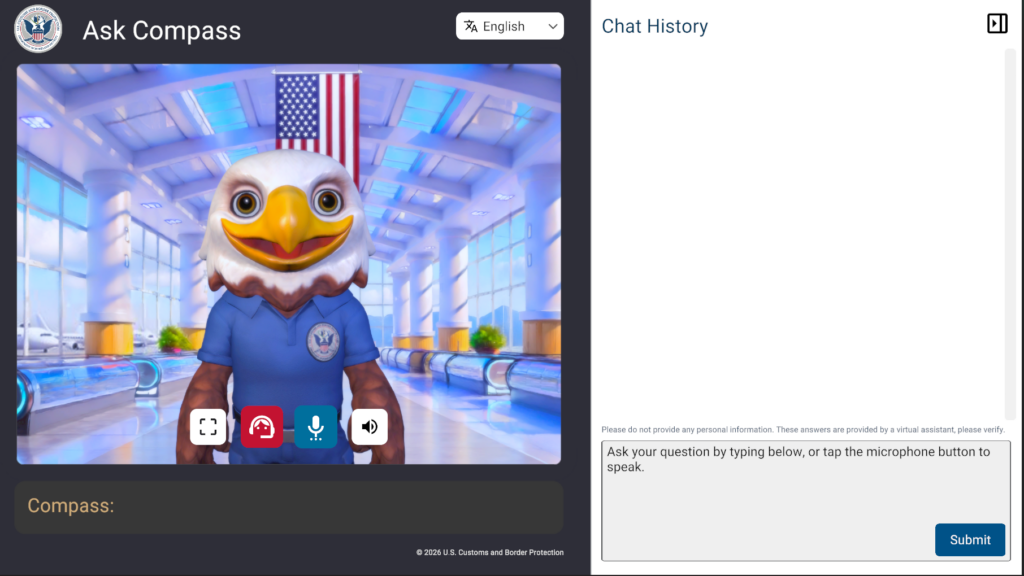
CBP has also created a dedicated tool called COMPASS, a virtual assistant built specifically for FIFA World Cup 2026 traveler questions about US entry requirements and documentation. It provides official answers to common entry questions and is a reliable resource for travelers with specific concerns about their situation.
A Practical Privacy Checklist for World Cup Travelers Entering the US
The following checklist is based on guidance from immigration attorneys, digital privacy organisations, and CBP’s own published directives. It is intended to help you understand what to expect and how to prepare, not to encourage non-compliance with lawful CBP instructions.
Before you travel:
- Ensure your ESTA or visa is valid and approved well before departure. Apply for ESTA at least 72 hours before your flight at esta.cbp.dhs.gov. Beware of third-party websites that charge additional fees.
- Understand that any content stored locally on your device is potentially reviewable during a basic CBP search. Content stored only in the cloud and not downloaded to your device is not accessible to CBP agents during a manual inspection.
- Consider what information is stored locally, and may be subjected to review: if you have confidential business information or sensitive communications on your device, a search could surface it, which you may prefer to avoid even though it wouldn’t impact your entry. If you carry a business device, but don’t need it on your trip, and don’t want it searched; leave it at home.
- Be aware that data from a CBP device search can be stored for up to 15 years in CBP’s Automated Targeting System and shared with other government agencies.
At the port of entry:
- Answer CBP officers’ questions honestly. Providing false information at a port of entry is a serious legal matter that can result in denial of entry and may affect future travel to the US.
- If asked to unlock your device, you may state clearly whether you consent or decline. Non-citizens should be aware that refusal may be used as a factor in an admissibility determination.
- If you are subject to a secondary inspection that you believe was conducted improperly, you can request a supervisor and, after your trip, file a complaint with CBP’s Office of Field Operations.
- Use CBP’s COMPASS tool for official guidance on any documentation or entry questions specific to your situation.
The Broader Context: Why Device Searches Are Increasing
The rise in CBP device searches is documented and significant. The number has grown from approximately 8,500 in 2015 to over 55,000 in 2025, according to CBP’s own published statistics. The increase accelerated further in 2025, with searches of US citizens’ devices rising particularly sharply, from 8,657 in 2023 to 13,590 in 2025, according to CBC News.
Civil liberties organisations including the Electronic Frontier Foundation and the ACLU have raised ongoing concerns about the scope of warrantless device searches at the border, arguing that smartphones contain a qualitatively different volume and type of personal information than physical luggage, and that the legal framework should reflect that difference. Multiple lawsuits challenging CBP’s electronic device policy are currently active in federal courts.
As Legal Examiner notes, unlike physical luggage, smartphones can contain years of personal communications, location data, medical information, financial records, and confidential professional materials. The legal question of whether warrantless digital searches at the border are meaningfully different from traditional border inspections remains actively contested in the courts.
For World Cup travelers, none of this changes the practical situation at the border. CBP’s current authority is what it is, and understanding it accurately is the most useful preparation.
Managing Your Digital Footprint Before You Travel
One aspect of travel preparation that many people overlook is reviewing what personal content has accumulated on the platforms they use regularly. Social media posts, comments, and messages from years past can be visible to anyone who accesses your profile or device, and they may not reflect current views or context.
For anyone thinking carefully about their digital presence before international travel, our guide to what a social media footprint is and why it matters is a useful starting point. If you have old posts, comments, or messages across platforms that you would like to clear before traveling, Redact lets you bulk delete activity across more than 35 platforms including Twitter/X, Reddit, Facebook, Instagram, and Discord. Everything runs locally on your device, meaning your credentials and content are never processed on Redact’s servers.
The 2026 World Cup is one of the largest sporting events ever staged. For the vast majority of international fans traveling to the US, entry will be smooth and the only thing on their mind at the border will be getting to the stadium. Going in with a clear understanding of what CBP can and cannot do, and what the ESTA process actually requires right now, is the best preparation any traveler can have.
Official resources
- CBP Official ESTA Application: esta.cbp.dhs.gov
- CBP Border Search of Electronic Devices: cbp.gov
- CBP Directive 3340-049B (January 2026)
- US Department of State Travel Information: travel.state.gov
Sources
- CBC News: CBP Searched a Record Number of Electronic Devices in 2025
- Berardi Immigration Law: What CBP Can and Can’t Do With Your Devices at the US Border
- FindLaw: CBP Border Phone Searches: Patchwork of Rules for US Citizens
- Legal Examiner: Can Border Agents Search Your Phone?
- AllAboutCookies: Are Border Phone Searches Legal?
- Pacific Legal Foundation: Searches of Electronic Devices at Ports of Entry (Policy Explainer)
- Kelley Drye: US to Require Social Media Disclosure for ESTA and Visa Applicants
- Envoy Global: FIFA World Cup 2026 Final Travel Readiness Guide
- AARP: What You Need to Know About Travel to the 2026 World Cup