How to Stop Getting Pre-Approved Credit Card Offers in the Mail
 Dan Saltman7 min read
On this page
That envelope with "You're pre-approved!" printed across the front didn't find you by luck. A credit card company went to a credit bureau, described the kind of customer it wanted, and bought a list of people whose credit files matched. Your name was on the list, so the offer went in the mail.
The very same law that lets these bureaus sell that list also gives you the right to take yourself off that list. OptOutPrescreen.com is where you exercise that right. Equifax, Experian, TransUnion and Innovis run the website jointly, and one request there covers all four bureaus.
Why These Credit Card Offers Exist to Begin With
It's called prescreening. The Fair Credit Reporting Act lets a bureau sell your name to any lender making a firm offer of credit or insurance. The lender sets the criteria, the bureau pulls everyone who fits, and the offers go out. Since 2005 the same law has made the four bureaus run one place to say no, which is why OptOutPrescreen is free and covers all of them at once.
A couple of things for you to know. First, the lookup that put you on the list is a soft inquiry, so the FTC confirms it doesn't touch your score, and neither does opting out. Second, "pre-approved" isn't approved. The lender checks your file again when you respond, and may still reject you.
How to Tell a Prescreened Offer From Ordinary Junk Mail
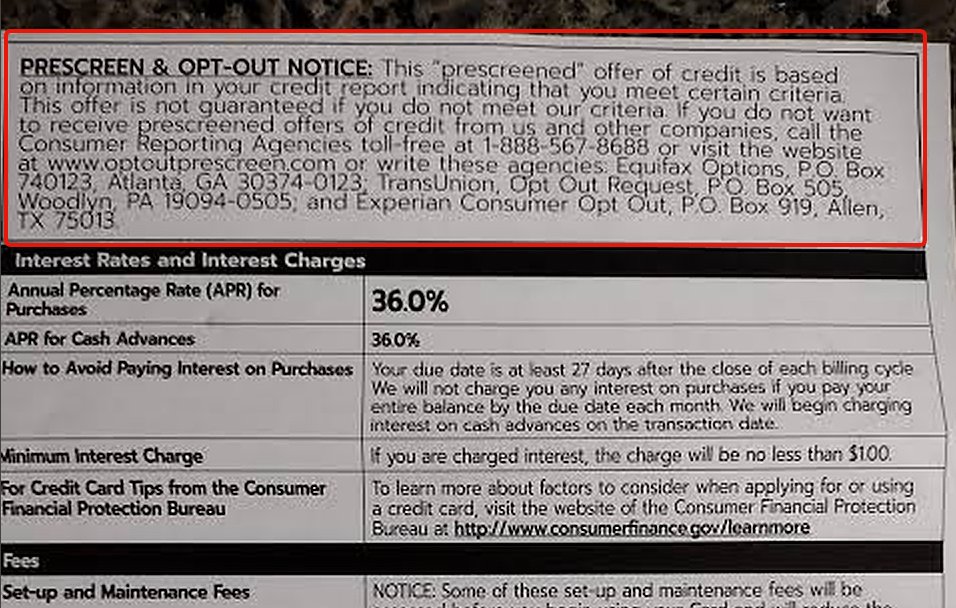
Not every card mailer came from a bureau list. Some are blanket mailings to a ZIP code, some come from a store you shop at or your own bank, and the opt-out doesn't touch those. The prescreened kind is easy to spot, because federal rules say it has to carry an opt-out notice, in a set place and a set size.
- Where it sits
- Usually on the back, above the rate and fee table. A shorter pointer to it sits on the front, near the main pitch.
- The heading
- Prescreen & Opt-Out Notice
- What it means
- A credit bureau sold your name to this lender. The opt-out below stops the next one.
Opting Out Online, Step by Step
The site only answers from a US internet connection. Turn off any VPN that exits elsewhere, and if you're actually abroad, wait until you're home or route through a US server.
- 1
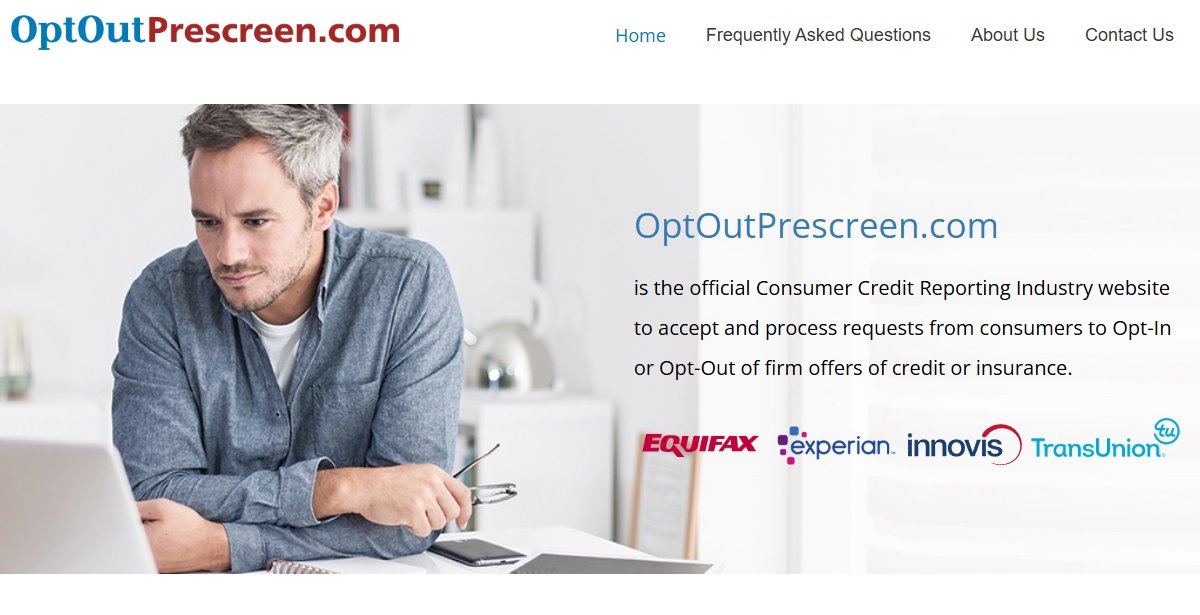
Open OptOutPrescreen
Go to OptOutPrescreen.com and click "Click here to opt-in or opt-out" near the bottom of the page.
- 2
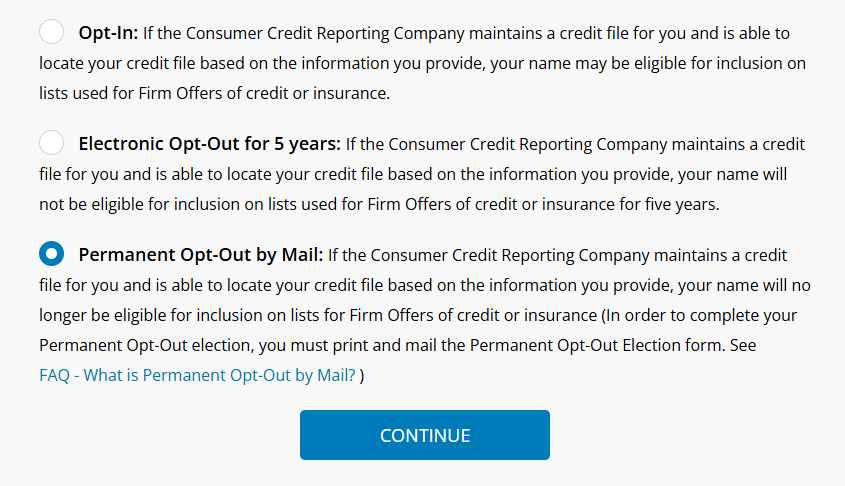
Choose Permanent Opt-Out by Mail
Skip the five-year option. Permanent starts the same way and never expires.
- 3
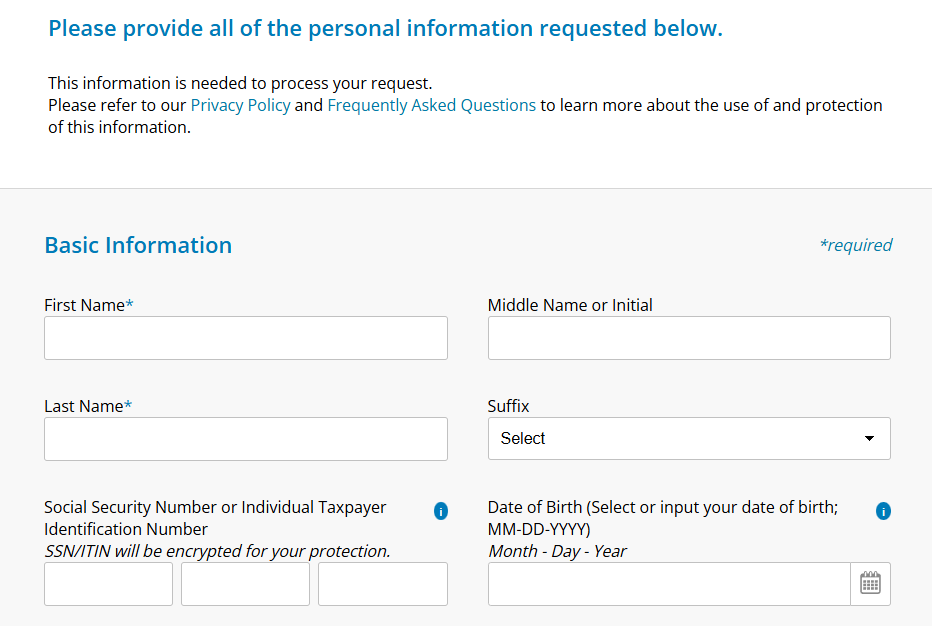
Fill in the form
Name, address, date of birth and Social Security number. The last two are optional, but the bureaus match on them, so give both.
- 4
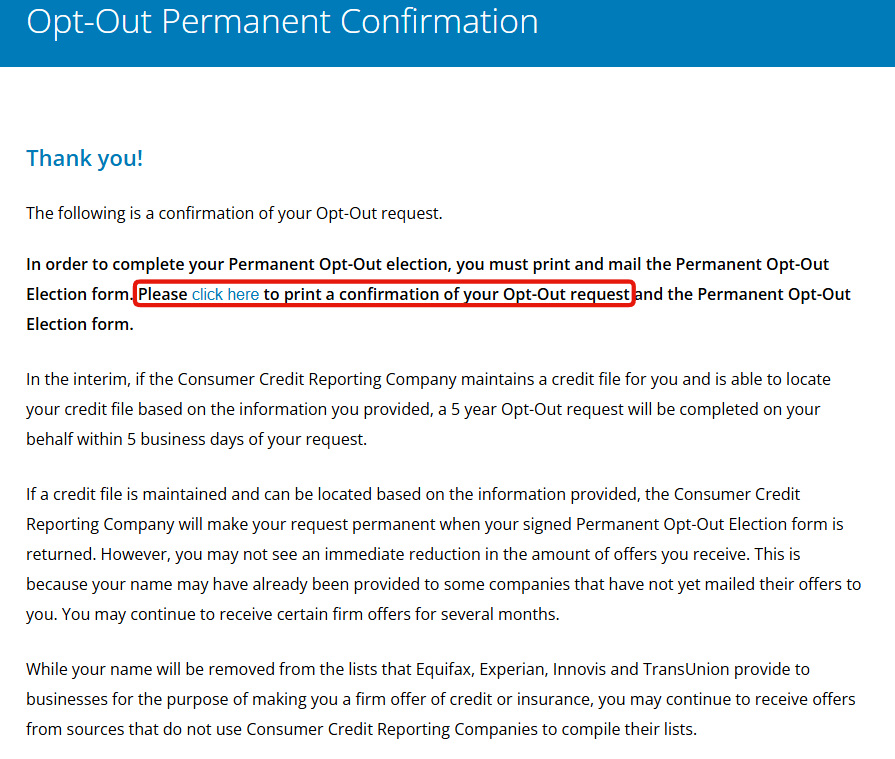
Submit, print, sign, mail
Print the form on the confirmation page, sign and date it, and post it to Opt-Out Department, P.O. Box 530200, Atlanta, GA 30353. Submitting starts the five-year opt-out, which takes effect within five business days. The permanent one takes over once the form arrives.
What Stops and What Keeps Coming
Give it time. The bureaus have five business days to process the request, but the offers already printed and paid for were built from lists sold weeks ago, and the Minnesota Attorney General's office puts the tail at up to 60 days. After that, here's the honest split.
| Stops | Keeps coming |
|---|---|
| Pre-approved card offers built from one of the four big bureaus' lists | Offers from a bank or card you already have |
| Pre-approved loan and insurance offers built the same way | Mailers a store or airline sends to its own customers |
| The prescreen inquiries lenders leave on your file | Blanket mailings sent to a whole area, no list involved |
| Your file being pulled for lists at all four bureaus | Charity appeals, catalogs and other marketing mail |
| Offers built from LexisNexis or SageStream lists, which have their own opt-out |
The right-hand column has its own switches. For general marketing mail the industry runs DMAchoice, which charges a small fee to process a request. For calls, the National Do Not Call Registry is free. And a company you already do business with can keep writing to you until you tell it directly to stop, because an existing relationship is one of the exceptions the law carves out. One more list sits outside all of this. LexisNexis, which now owns the credit bureau SageStream, sells prescreen lists of its own, and OptOutPrescreen doesn't reach them. That opt-out is on the LexisNexis site, and our LexisNexis removal guide walks it.
Why Your Mailbox Is Worth Clearing
More than half of what the Postal Service carried in its 2025 fiscal year was marketing mail, 56.8 billion pieces of it.
What the Postal Service delivered, fiscal 2025
Marketing Mail
First-Class Mail
Shipping and packages
Periodicals, international and other
The opt-out won't empty your mailbox, but it removes the one kind of marketing mail that's dangerous when it goes astray. A pre-approved offer is an application with your name and address already on it, and the Postal Inspection Service logged more than 800,000 mail theft complaints between 2023 and 2025. Someone who lifts one from your box is most of the way to a card in your name. A credit freeze makes a stolen offer worthless. This opt-out stops most of them arriving in the first place. Do both.
FAQ
Does opting out hurt my credit score?
No. Prescreening uses soft inquiries, which don't count toward your score, and removing yourself from the lists doesn't leave a mark either. Lenders you apply to yourself can still pull your file exactly as before.
Will I lose access to good card deals?
You lose the ones that arrive uninvited. The FTC notes that prescreened offers sometimes carry better terms than a lender advertises publicly, so if you like comparing offers that way, the five-year election is the reversible version. You can also opt back in at any time on the same site or phone line.
I opted out weeks ago and offers are still arriving. Did it fail?
Probably not. Offers already in the pipeline were built from lists sold before your request, and it can take up to 60 days for them to run dry. If they're still coming after that, check that the offer carries the prescreen notice at all. If it doesn't, it almost certainly didn't come from a bureau list. If it does and they keep coming, it may have been built from a LexisNexis or SageStream list, which takes its own opt-out.
Does this stop insurance offers as well?
Yes. The same law covers firm offers of insurance built from bureau lists, and the same election stops them.
I moved. Do I need to opt out again?
No. The election is tied to you, not to an address, and it carries over. Opting out again with your new address does no harm if you want to be sure the bureaus have matched you correctly.
Is the site legitimate? It asks for a lot.
It is. It's the one site the four bureaus are required by law to run jointly, and the FTC, the CFPB and every state attorney general point to it. Nothing else claiming to do the same job is the real thing, and no legitimate opt-out will ever ask for a card number or a fee.