Getting off People Search USA used to mean counting your records and filing for each one from a results list. The list is gone. Since the site changed its form, a removal is a description of one person, typed into a page titled Privacy Requests, and a link you click from your email. That's quicker, but it also means you can't see what the site matched, so accuracy in what you type counts for more than it did.
Want the background first? The People Search USA profile covers Truth Now LLC, the Illinois class action, and its place in the 2024 MC2 Data leak.
A cleared listing and a stopped charge are two different requests. Ring (855) 420-0512 for the second one, ideally before the seven-day trial rolls into a full charge. The terms hold fees non-refundable unless People Search USA is the party cancelling the order.
The steps
Remove your listing
01
Start on the right half of the page
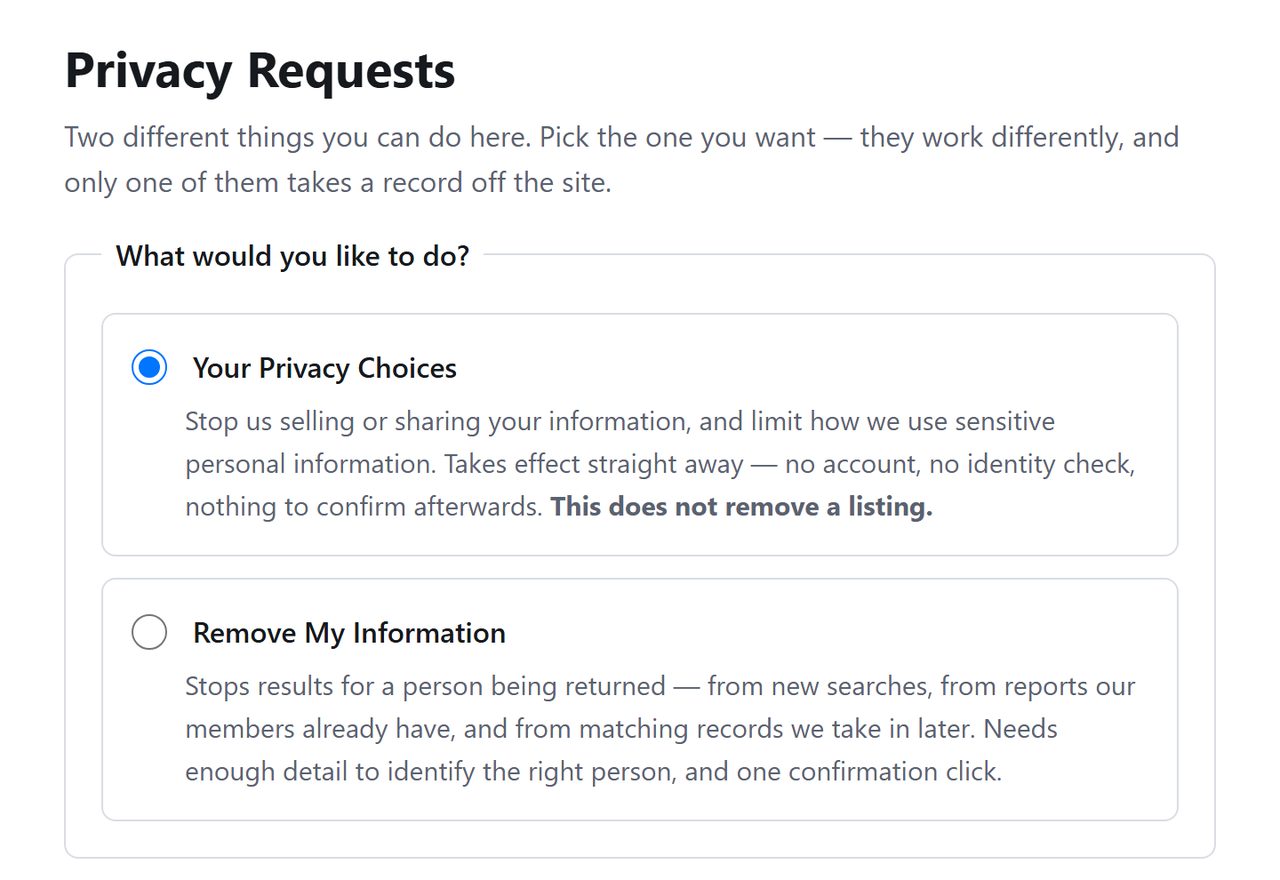
At peoplesearchusa.org/api/helper/optOutLight/search the site offers two requests in one place. Your Privacy Choices is quick and doesn't touch a listing. Remove My Information is the one that gets a person out of search results, so choose that.
Choose the request that removes a listing.
02
Enter one identity
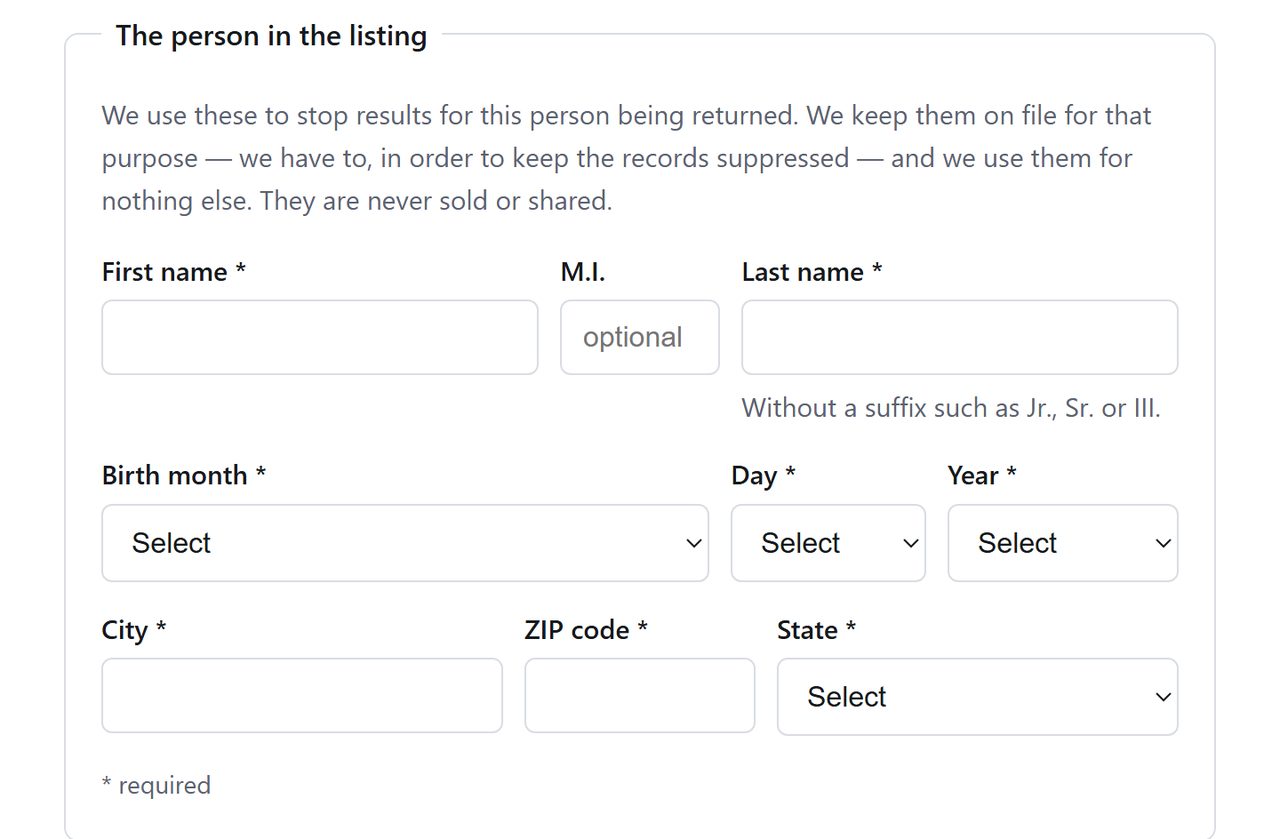
Give the first name, the last name with no Jr., Sr. or III on the end (the site asks for that under the box), the date of birth, and the city, ZIP code and state. Each submission describes a single person at a single location.
Before you go on, jot down every other way you might be listed, such as a married name or a previous city. Those are your later submissions.
Surname only, with the suffix left off.
03
Provide an email and send
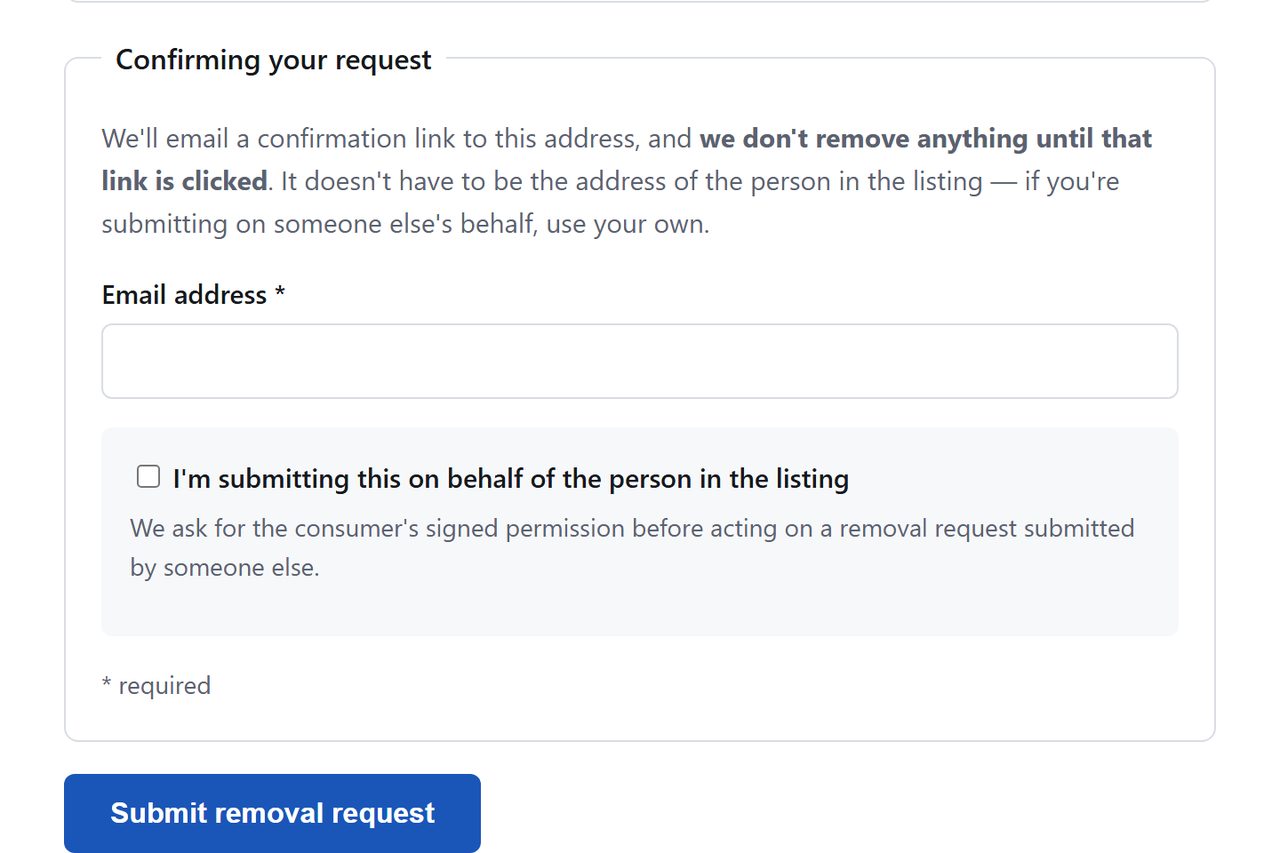
Enter an address for the confirmation message and press Submit removal request. There's no reason to give a people-search company your main inbox while you're removing the details it already holds, so a spare one is the sensible pick. A CAPTCHA could follow once you've pressed it. We stopped just short.
A spare inbox is enough.
04
Confirm, then repeat for the next name
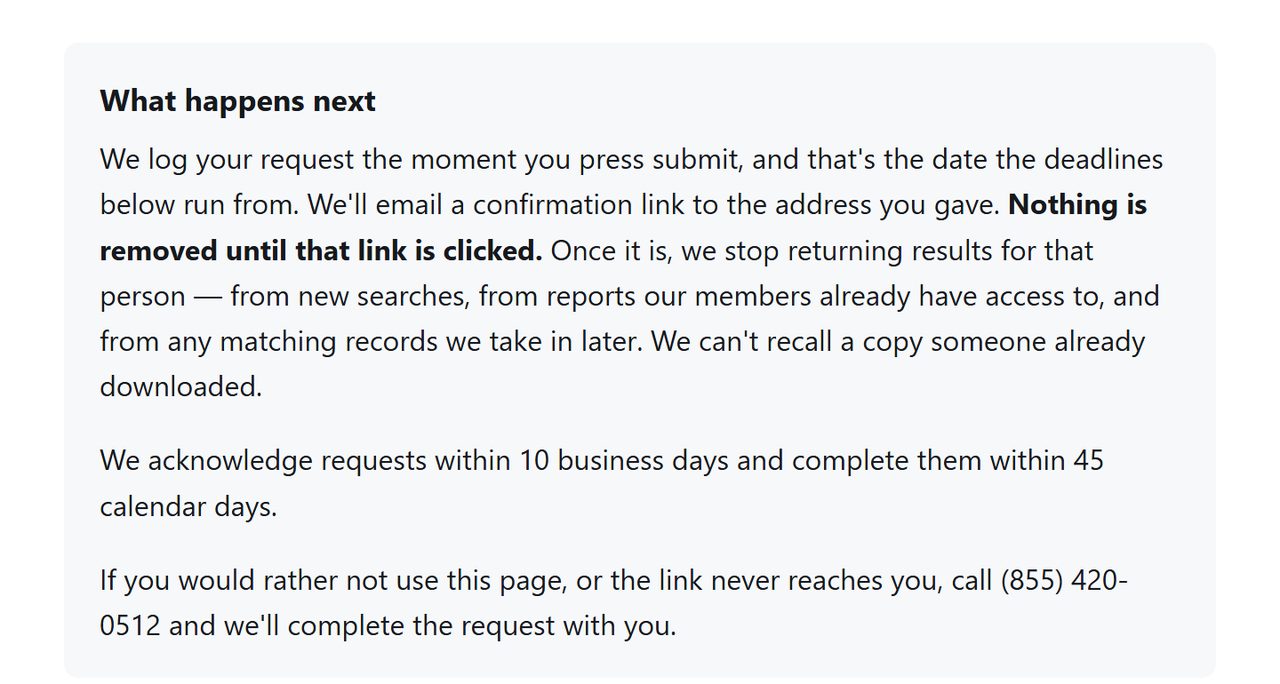
People Search USA's page says it won't act until its emailed link is clicked. Once you've clicked, go back to the top and file again for each name or address on your list. Nothing on the page suggests one request carries over to another.
Confirm each request from its own email.
Related sites
Do the sister sites
Truth Now LLC puts four domains on one California filing, this being one. SealedRecords and Check Secrets are two of the others, and turning up on one generally means turning up on the others. The fourth domain on the filing is spelled inmatesearcher.com with a single "s", which is a different and unrelated site from the InmatesSearcher we profile.
One filing isn't one opt-out. SealedRecords and Check Secrets each serve the request page under their own name, and each page speaks for its own site only. Both use the same form as this one. That doesn't extend to the single-"s" inmatesearcher.com, which isn't one of these sites.
Confirm
Check it worked
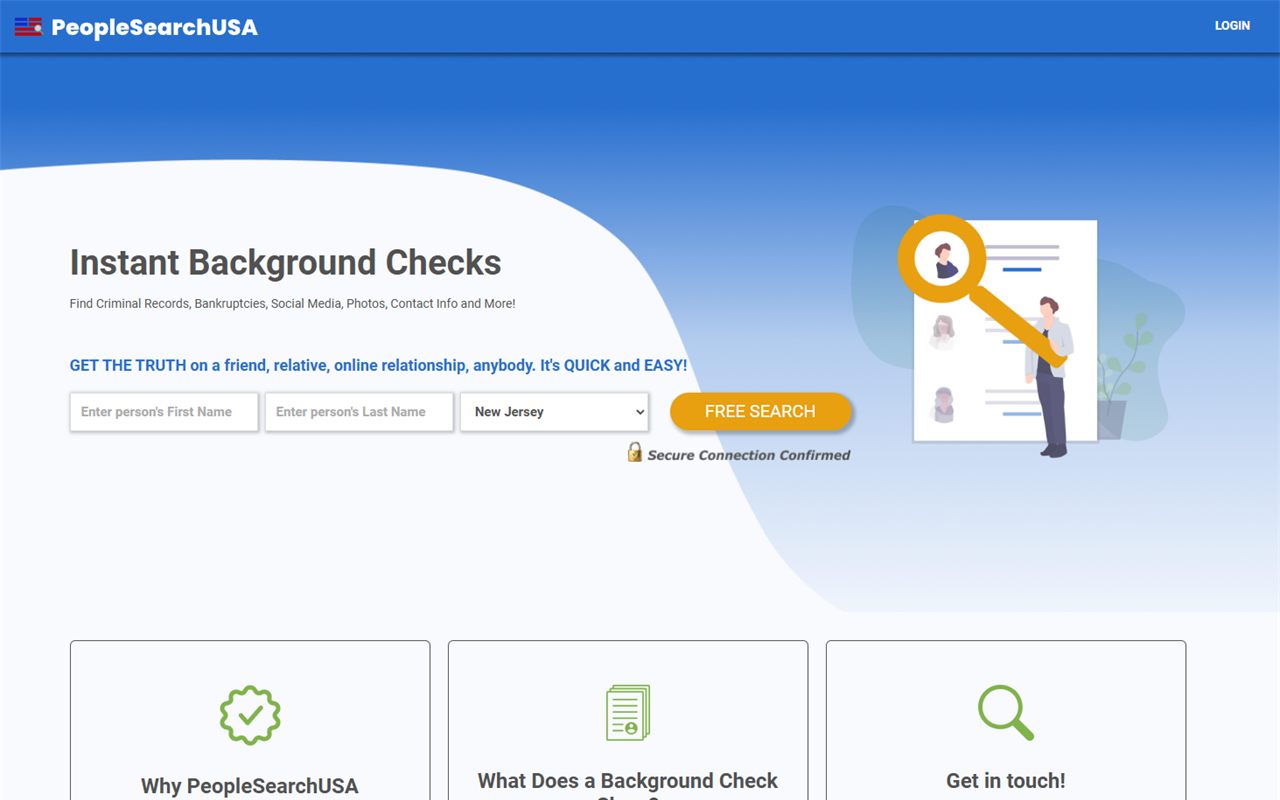
People Search USA's search page asks for card details before it shows anyone, which we saw with a test name on October 8, 2026. Skip it. Give it a week, then try site:peoplesearchusa.org alongside each name you filed in a search engine.
Keep every confirmation email, not just the first. With several submissions in flight they're the only way to tell which ones you've dealt with.
If it fails
Troubleshooting
One listing went, another didn't. The second is probably held under details you haven't filed yet. Submit again with that name or city.
No confirmation email. Look in spam, then submit again from a different address, or call (855) 420-0512, the line the form gives for completing a request by phone.
Too many variations to file by hand. Write to support@peoplesearchUSA.org and set out the records you want gone.
Illinois residents. The operator has already answered a putative class action in Illinois over how it handles personal data, which is worth knowing if a request goes ignored.
Staying off
Keeping it from coming back
Expect to look again. Records here are rebuilt from public sources, so details can resurface months later without anyone deciding to relist you. Recheck every few months, and take in the other domains on the filing while you're at it.
Take yourself off data broker sites
Redact scans data broker sites from your device, finds where your details are listed, and submits the removal requests for you. If a broker relists you, it files again.
October 8, 2026 · Steps rebuilt from People Search USA's current removal page, loaded, read and captured on October 8. We did not file a request, and everything described after the submit button is the site's statement. Supporting research is dated August 5, 2026, from the site's privacy policy and terms, the California data-broker registry, both BBB profiles and the CourtListener docket for the Illinois class action. The only complete run so far is on Background Checkers, another site with this page, where the link arrived by email (in spam) and worked.