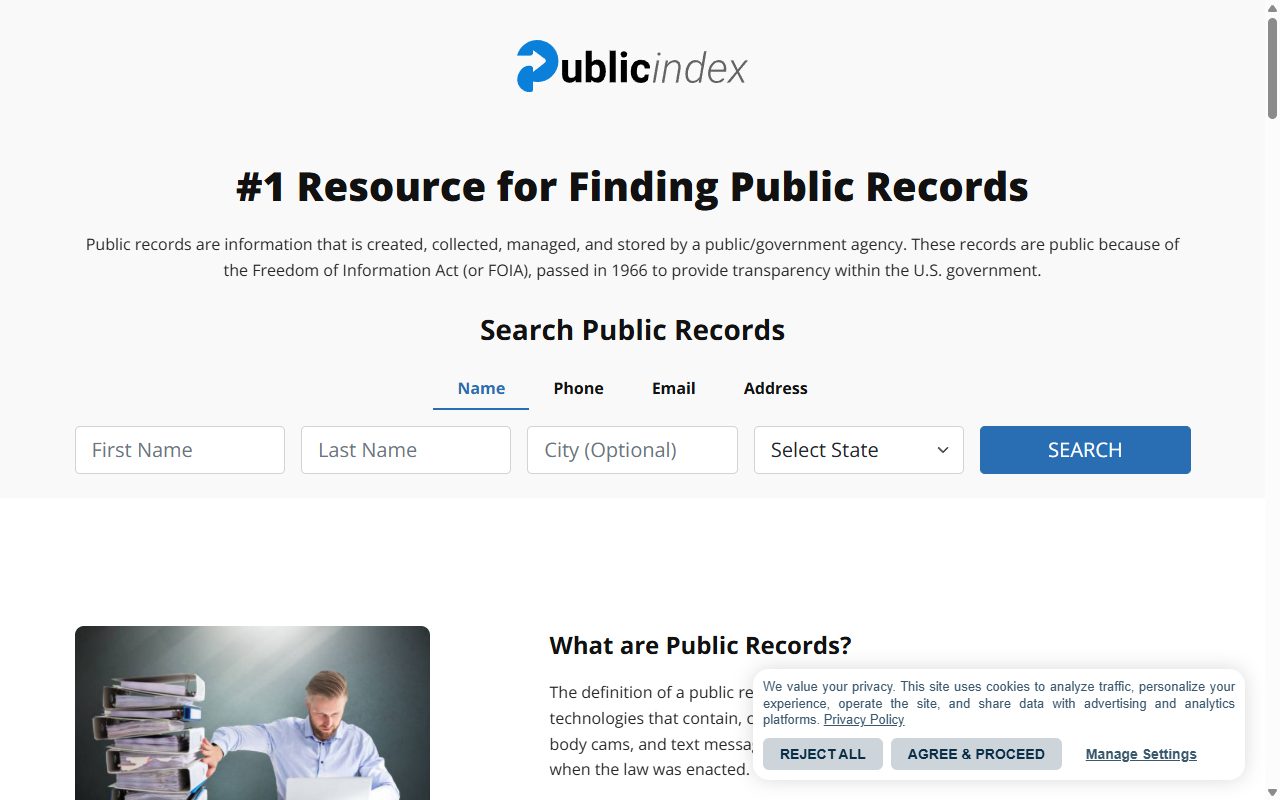
ThePublicIndex uses the InfoPay family's search-first opt-out - find your listing, tick it, and request removal through members.thepublicindex.org. The flow was walked for real on August 11, 2026 - the screenshots below are this domain's own screens, and it ran exactly like its verified sibling StateCourts.org: search, tick Select Record, push the red Remove Data button, add an optional confirmation email.
The full picture: See the ThePublicIndex data broker profile for what it publishes, who operates it, and how it sits in InfoPay's thirteen-domain family.
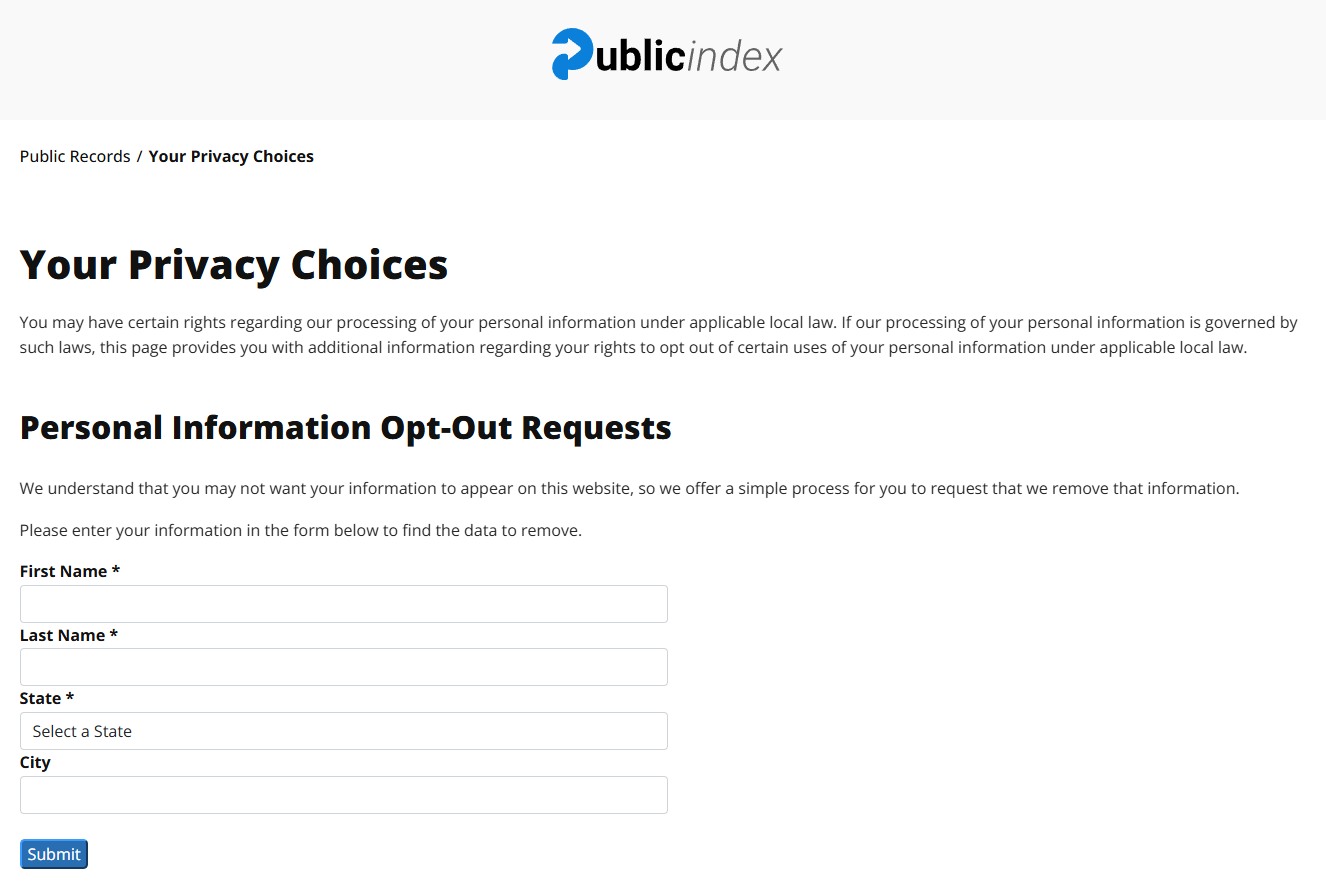
Go to thepublicindex.org/optout. The page is headed Your Privacy Choices, and under Personal Information Opt-Out Requests the form asks for your first name, last name, and state (city is optional). In the site's own words, "Please enter your information in the form below to find the data to remove" - this step locates the listing; the next screens act on it. Press Submit.
The opt-out search - name and state find the record.
02
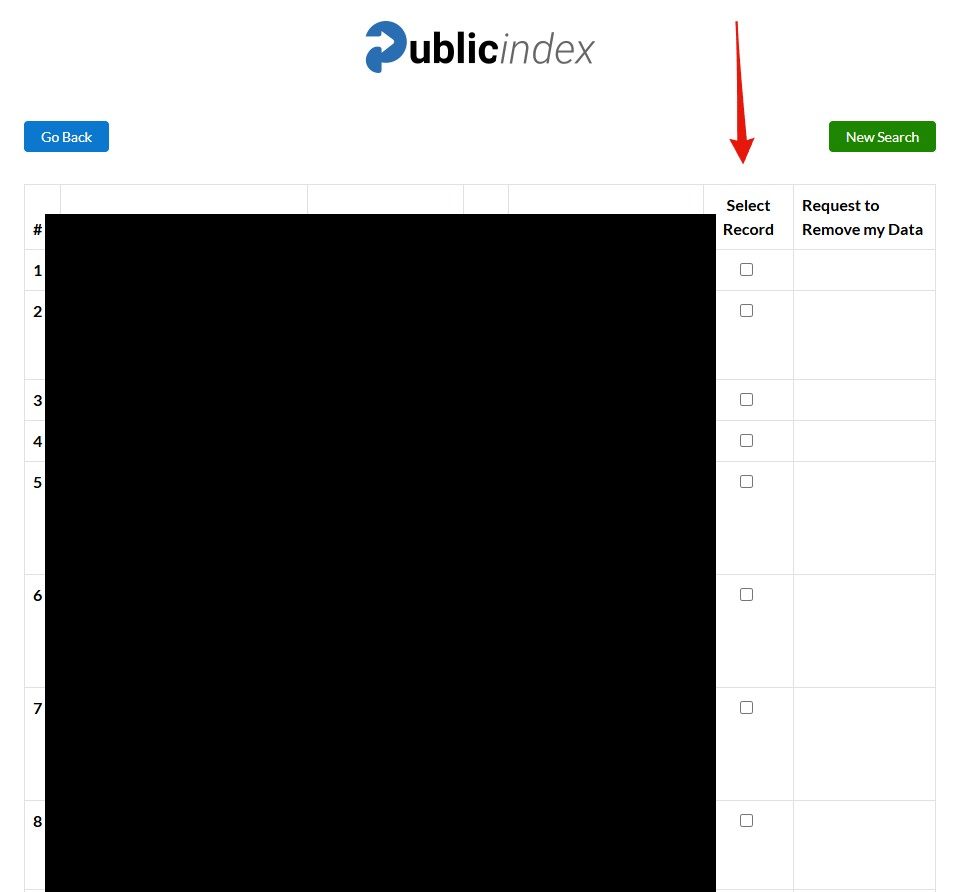
Find your row and tick Select Record
A results table on members.thepublicindex.org lists every matching record, with columns for Report ID, Name, Age and Addresses. Browse until you find the row that's actually you - check the age and the addresses before ticking, because aggregated records get misattributed across common names - then tick its Select Record checkbox. Go Back and New Search buttons sit above the table if the search needs another pass.
The results table - tick Select Record on the row that's you.
03
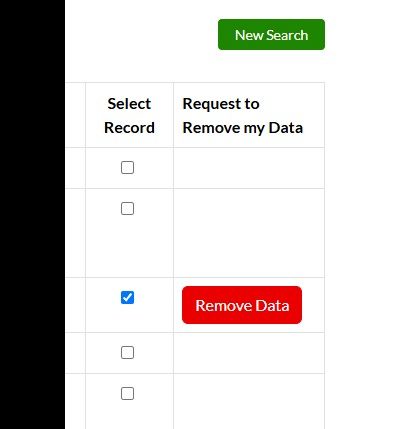
Click the red Remove Data button
Ticking the checkbox makes a red Remove Data button appear in that row's Request to Remove my Data column. Click it to submit the removal request for that record.
Tick the box and the red Remove Data button appears - click it.
04
Add your email for written confirmation
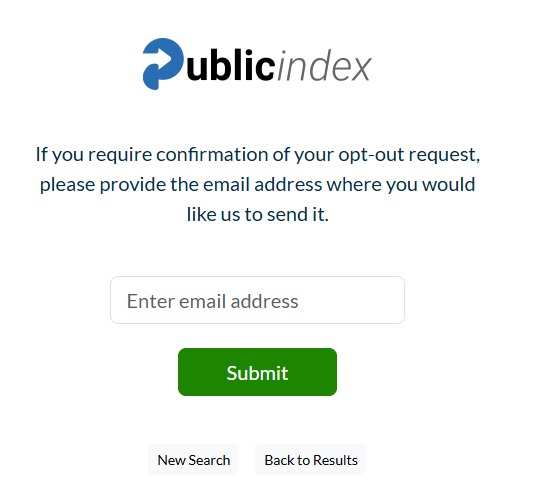
The final screen's own words: "If you require confirmation of your opt-out request, please provide the email address where you would like us to send it." The email is optional, but fill it in and press Submit - that confirmation is the only written record of the request you'll get.
The optional email - worth giving, it's your only receipt.
There's a separate path for judges and law enforcement. Every opt-out page in this family carries a Covered Person Removal Request section citing the Daniel Anderl Judicial Security and Privacy Act, for current, former and retired judges, prosecutors and law-enforcement staff plus immediate family in the same household. If that's you, use that path rather than the ordinary form - it's a different legal basis and a stronger one.
Confirm
Confirm it worked
Re-run the search a week later, and re-run it by phone number and email address as well as by name - a name-based removal isn't evidence the reverse-lookup surface is clear.
InfoPay reports a six-day median on deletions across its estate with roughly a quarter denied, so thirty days is the point to escalate to compliance@infopay.com.
If it fails
Troubleshooting
An "Are you human?" slider appears between search and results:members.thepublicindex.org now serves the same slide-to-verify check as its sister sites. Slide it fully to the right, wait for the button beneath to read Continue, and click that. If it still blocks you, use the email fallback rather than fighting it.
Email fallback:compliance@infopay.com and (800) 309-9351, the contacts InfoPay filed with California. Name thepublicindex.org specifically, since one filing covers thirteen domains.
Removed by name but still findable by phone: submit again using the identifier that still works. Treat each identifier as its own listing until proven otherwise.
You're a judge, prosecutor or law-enforcement officer: use the Covered Person Removal Request section on the same page, under the Daniel Anderl Judicial Security and Privacy Act.
Stay off
Keep your record off
InfoPay rebuilds from public-records feeds, so a suppressed listing can come back when fresh data lands. Recheck quarterly.
And remember the removal is per-brand. InfoPay files thirteen domains on one registration and publishes nothing to say a suppression on one reaches the others, so check whichever siblings list you - InfoTracer is the largest, and CourtRecords.us, StateRecords, RecordsFinder and CourtCaseFinder each run their own. Redact's data-broker scan runs that loop for you and refiles when a record reappears.
Take yourself off data broker sites
Redact scans data broker sites from your device, finds where your details are listed, and submits the removal requests for you. If a broker relists you, it files again.
August 11, 2026 · Confirmed by a real walkthrough of this domain - four step screenshots wired in, replacing the flow previously borrowed from CourtCaseFinder. The tick-then-red-button removal matches StateCourts.org's walked flow; the email is optional and confirmation-only per the screen's own text; no slider gate appeared on this run. On September 10, 2026 the members page served the slide-to-verify check, which waits for a Continue press after the drag, so the troubleshooting now covers it.