













Broker profile

LiveRamp

A publicly traded identity-resolution and data-connectivity broker (NYSE: RAMP), operated by LiveRamp Holdings, Inc. in San Francisco. Its flagship RampID graph resolves names, addresses, phones, emails, and device IDs into one per-person identifier sold to advertisers and other data brokers via its Data Marketplace, claiming roughly 700M profiles globally and 250M+ in the US. Founded in 2011 and bought by Acxiom in 2014; the original Acxiom Corporation renamed itself LiveRamp Holdings in 2018 after selling its marketing business, which kept the Acxiom name. Now facing an active N.D. Cal. CIPA / Wiretap class action; the court denied most of its motion to dismiss in July 2025, though its own self-service opt-out is a short web form.

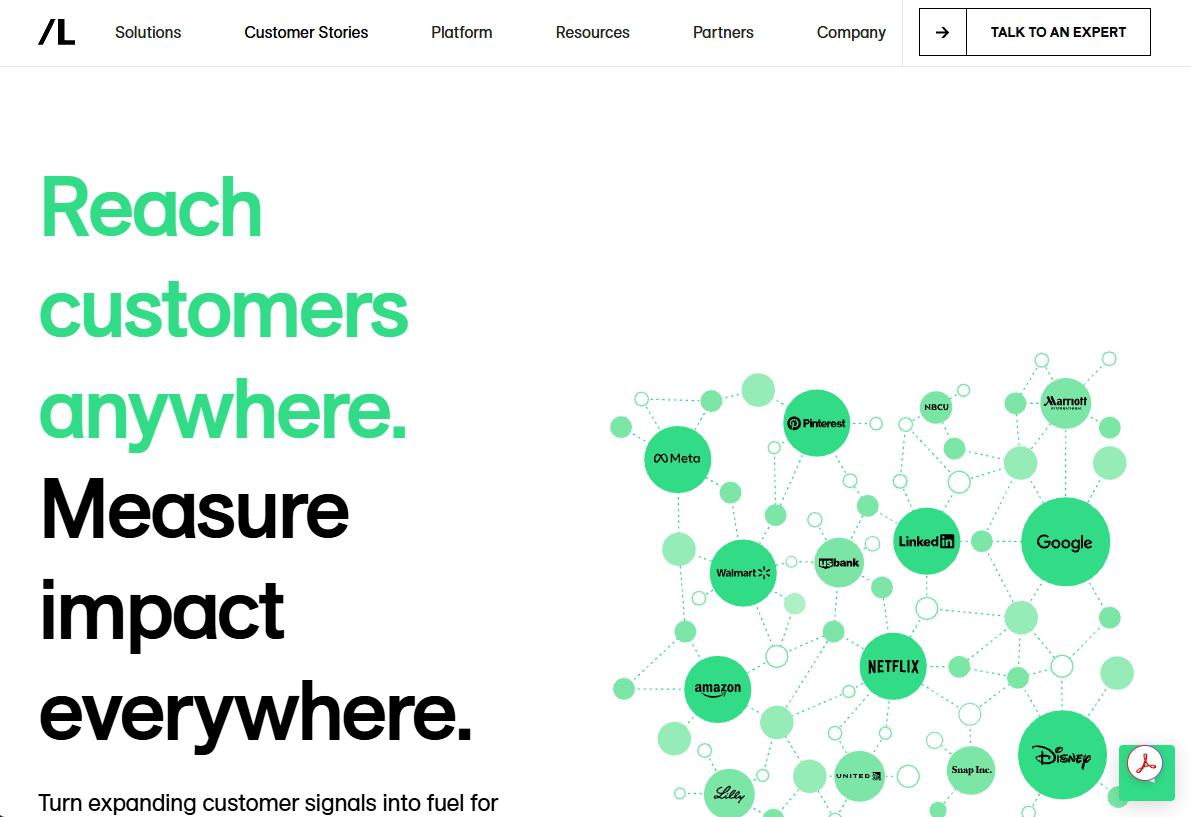
LiveRamp homepage screenshot

LiveRamp overview

At a glance

Quick facts
Privacy Risk
LimitedModerateSubstantialExtensive
Data published
Moderate
Re-listing frequency
Occasional
Complaint record
Mixed
Opt-out friction
Moderate
Operator opacity
Fully disclosed
Prior data incidents
None documented

Each broker is scored 1 to 4 across the six dimensions above; higher means more exposure, and the overall gauge is their average.

What each dimension means
  • Data published: how much and how sensitive the personal data they put out.
  • Re-listing frequency: how quickly you reappear after opting out.
  • Complaint record: the volume and pattern of complaints across BBB, Trustpilot, and Sitejabber. No listing, or a listing with no reviews, counts against the broker.
  • Opt-out friction: how hard the removal process is to complete.
  • Operator opacity: how hidden the operating company and its principals are.
  • Prior data incidents: history of breaches or leaks of the data they hold.
Category

Identity resolution · data connectivity

Operating entity

LiveRamp Holdings, Inc.

Founded

2011

Headquarters

225 Bush St, San Francisco, CA

Ownership

Public (NYSE: RAMP)

Profile scale

~700M global · 250M+ US

Active litigation

CIPA / Wiretap class action

FCRA covered?

No

Background

Background

Company history

LiveRamp's product is the RampID identity graph, a per-person pseudonymous identifier that ties together all the consumer signals advertisers and data brokers want to act on - work and personal emails, postal addresses, phones, mobile advertising IDs, cookie IDs, and offline-to-online behavioral history - into one resolved record that follows the consumer across devices and channels. Customers (advertisers, publishers, data brokers) license access to RampID and to LiveRamp's Data Marketplace to enrich their own customer files, target audiences across platforms, and measure ad effectiveness. LiveRamp doesn't run a consumer-facing search page; the data lives in enterprise APIs, clean-room collaborations, and ad-platform integrations.

Founded

2011

Renamed from Acxiom Corporation

October 1, 2018

Public listing

NYSE: RAMP

Habu acquisition
Active litigation

CIPA / Wiretap class action

LiveRamp launched as a standalone identity-resolution startup in 2011 in San Francisco. Acxiom announced the deal in May 2014 at approximately $310 million and completed it on July 1, 2014 for about $278 million in cash plus assumed stock options, then folded LiveRamp into the broader Acxiom marketing-services stack. The combined entity grew through additional acquisitions (Arbor, Pacific Data Partners, others) and continued investing heavily in cross-device identity tech and the Data Marketplace through the late 2010s.

On October 1, 2018, the Acxiom of that era split: Acxiom Marketing Solutions (the offline-marketing-and-direct-mail side) was sold to Interpublic Group for $2.3 billion and retained the Acxiom brand (the Acxiom that exists in this directory today). The identity-resolution side stayed as a standalone public company - the entity renamed itself LiveRamp Holdings, Inc. and the ticker NASDAQ: ACXM became NYSE: RAMP.

Post-split LiveRamp grew through additional product launches (Authenticated Traffic Solution, RampID v2, Safe Haven clean rooms) and the January 2024 acquisition of Habu for approximately $200 million. Revenue has continued double-digit growth into fiscal 2026. The current major external pressure is the active CIPA / Wiretap class action in N.D. Cal., where the court denied most of LiveRamp's motion to dismiss on July 18, 2025.

LiveRamp is a different kind of "data broker" than the people-search brokers in this directory. Like Acxiom (the marketing business LiveRamp sold in 2018, back when it was itself called Acxiom), Epsilon (profile), and Datalogix (defunct), LiveRamp is enterprise-facing - the data lives in paid APIs and cross-platform integrations rather than a consumer-search page. The privacy concern is identity-resolution scale. Even though no individual piece of data may be sensitive on its own, the resolved profile tying name + address + email + device IDs + purchase history together is uniquely powerful, and uniquely useful to anyone who buys a Data Marketplace segment built on top of it.

The Acxiom relationship today. Acxiom and LiveRamp are now separate companies competing in adjacent spaces. Acxiom (under Omnicom since November 2025) handles direct-marketing and consumer-segmentation data; LiveRamp handles identity-resolution and data-connectivity infrastructure. The split has held for seven years and there's no operational data sharing between the two post-2018 - though LiveRamp's customer base overlaps heavily with Acxiom's.

Data Published

Data types

RampID + Data Marketplace
  • Full names, postal addresses, email addresses, phone numbers

  • Hashed identifiers (SHA-256 email, phone, address hashes used in clean-room matching)

  • Mobile advertising IDs (Apple IDFA, Google GAID) and device identifiers

  • Cookie IDs and cross-device browser fingerprints

  • Demographic and household composition data

  • Purchase history (via Data Marketplace partner integrations)

  • Inferred-interest and lifestyle segments (built on top of resolved profiles)

  • Offline-to-online activity bridges (loyalty program + ad impression linkages)

  • RampID itself: the unique pseudonymous identifier assigned per resolved consumer

  • Habu clean-room data (added January 2024; second-party data collaboration)

How the data is sourced: Primarily through customer onboarding (advertisers and publishers upload their first-party customer data into LiveRamp for resolution and matching against other customers' data via clean rooms), Data Marketplace partner contributions (other brokers sell into LiveRamp's ecosystem), and historical data flows inherited from the Acxiom-ownership era. LiveRamp positions itself as identity connectivity infrastructure rather than a primary data collector, but the resolved RampID profile is functionally a consumer dossier.

The core allegation in the active CIPA case. The plaintiffs in the N.D. Cal. class action argue that the act of resolving these signals into a single per-consumer RampID profile - and then licensing access to that profile to advertisers and other data brokers - constitutes invasion of privacy and (under the Wiretap Act / CIPA) electronic surveillance without consent. LiveRamp's defense rested on a motion to dismiss arguing the company is identity infrastructure, not a primary collector; the court denied most of that motion in July 2025, letting the case proceed to discovery.

Contact

Contacts & links

LiveRamp Holdings, Inc.
Operating entity

LiveRamp Holdings, Inc. (NYSE: RAMP)

Headquarters

225 Bush Street, 17th Floor San Francisco, CA 94104

Privacy Choices (opt-out, deletion, access)
Permanent opt-out by email
Privacy policy
Service privacy notice (CCPA / CPRA)
CA Data Broker registration

LiveRamp Holdings, Inc. · 2024 filing reports 132 requests to delete - 72 complied in whole, 60 denied - cppa.ca.gov/data_broker_registry/

SEC filings / investor relations
General website

Network

Sister brands

Former Acxiom · standalone since 2018

LiveRamp is now an independent public company; the relevant context is the historical Acxiom split and the surviving marketing-data peer group.

Cross-category comparison: within this directory, LiveRamp's closest analog by data-product shape is the late Datalogix (Oracle Advertising, defunct Sep 2024). Both were built around identity resolution at consumer scale; LiveRamp survived where Datalogix didn't, in part because LiveRamp anticipated cookie deprecation early and built clean-room infrastructure to replace third-party-cookie matching. Among active brokers, Acxiom (the marketing business LiveRamp sold in 2018, now Omnicom-owned) and Epsilon (Publicis-owned) are the closest competitors. None of the B2B-contact-data peers (ZoomInfo, RocketReach, Clearbit) operate at the consumer-identity scale LiveRamp does.

LiveRamp is independent from Acxiom post-October 2018

Despite the historical relationship, LiveRamp and Acxiom are now separate publicly disclosed entities. A privacy / opt-out request submitted to LiveRamp covers LiveRamp's RampID graph and Data Marketplace - it does not propagate to Acxiom, and Acxiom opt-outs do not propagate to LiveRamp. The customer bases overlap (advertisers buy from both), but the data backends are separate. The Habu data, post-2024 acquisition, is part of LiveRamp's holdings; an opt-out at LiveRamp covers Habu data too.

LiveRamp stands alone on the broker mapExplore the full map

Reputation

Trust signals

B2B-skewed; active litigation is the dominant signal

LiveRamp is enterprise-only - the customers (advertisers, publishers, data brokers) interact through APIs and enterprise contracts, not consumer-facing products. So conventional consumer-review presence is minimal. The dominant trust signal is the active N.D. Cal. CIPA class action and the July 2025 motion-to-dismiss ruling, which is the strongest public evidence of regulatory and litigation pressure on the company.

N.D. Cal. CIPA / Wiretap class actionMTD largely denied July 18, 2025; proceeding to discovery; no settlementActive MTD-deniedAs of Jul 22, 2025View docket ↗
Better Business BureauLiveRamp (San Francisco, CA) · not accredited · file opened January 2024 · one complaint, unansweredA- ratingAs of Sep 18, 2026View profile ↗
Trustpilotliveramp.com · unclaimed profile · 0 reviewsNo reviewsAs of Sep 18, 2026Trustpilot ↗
SmartCustomer (formerly Sitejabber)liveramp.com · listing exists with no reviews0 reviewsAs of Sep 18, 2026SmartCustomer ↗
G2 (B2B customer reviews)liveramp.com · enterprise advertiser / publisher customer reviewsGenerally positiveAs of 2026-05View G2 reviews ↗
SEC EDGARPublic-company disclosures · NYSE: RAMP · 10-K, 10-Q, 8-K, proxy statements all on EDGARFull disclosureAs of Current filingsSEC EDGAR ↗
  • The core CIPA case theory: identity profiles created without consumer consent or knowledge

  • Cross-device tracking (RampID following the same person across browsers, phones, offline records) being more pervasive than consumers realize

  • Data Marketplace resale - LiveRamp customers can on-sell audience segments built from RampID, expanding the data's reach beyond LiveRamp's direct relationships

  • Authenticated Traffic Solution (ATS) being implemented on publisher sites without clear consumer-facing notice

  • Cookie-deprecation-era pivot to first-party-data clean rooms (Habu, Safe Haven) creating new uncertainty about who has access to resolved profiles

Common consumer-side themes:

Litigation

Litigation history

Active CIPA class action · no settlement yet

The dominant active matter is a consumer-privacy class action in the U.S. District Court for the Northern District of California alleging unconsented identity-profile creation and sale. LiveRamp's motion to dismiss was denied on July 18, 2025 except as to the declaratory-judgment count; the case is now proceeding to discovery. No FTC enforcement, state Attorney General consent decree, or other major private settlement is on the public record as of the last-updated date.

Consumer Privacy Class Action v. LiveRamp Holdings, Inc.

Active

U.S. District Court, Northern District of California · CIPA / Wiretap / unjust enrichment · MTD largely denied July 18, 2025

Court

N.D. Cal.

Claims

Wiretap Act · CIPA · invasion of privacy · unjust enrichment

Motion to dismiss

Largely denied July 18, 2025

Class

California consumers in RampID profiles

Status

Discovery

The plaintiffs allege that LiveRamp aggregated consumer signals - names, addresses, phones, email addresses, device IDs, behavioral history - into comprehensive identity profiles (each assigned a RampID) without the data subjects' consent or knowledge, then sold or licensed those profiles to advertisers and other data brokers across its Data Marketplace. The complaint frames the resolution step (turning disparate signals into a single per-person profile) as itself an act of surveillance under the federal Wiretap Act and the California Invasion of Privacy Act. LiveRamp's defense argued it is identity infrastructure rather than a primary collector and moved to dismiss; on July 18, 2025 the court ruled the plaintiffs had adequately pleaded every claim except declaratory relief, dismissed that count without leave to amend, and denied the rest of the motion. The case is now in discovery. No settlement has been reached or announced.


Related and contextual matters:

  • Wiretap / CIPA litigation pattern. The N.D. Cal. CIPA case is part of a broader wave of wiretap / CIPA claims against tech companies and data brokers in 2024-2025, similar to the Katz-Lacabe v. Oracle case that drove Oracle's $115M settlement and Oracle Advertising shutdown. The legal theory - that the act of correlating consumer signals constitutes "interception" of communications - has been gaining traction in California courts.
  • No FTC enforcement against LiveRamp specifically as of the last-updated date. Federal attention on identity-resolution brokers has been policy-and-rulemaking rather than enforcement action.
  • Public-company disclosure obligations require LiveRamp to disclose material litigation in 10-K and 10-Q filings, so the CIPA case is documented in current quarterly disclosures.

FAQ

Q & A

Common questions
Is LiveRamp a data broker?

Yes. LiveRamp Holdings, Inc. (NYSE: RAMP) is an enterprise-facing identity-resolution and data-connectivity broker. Its flagship product is RampID, an identity graph that ties together consumer signals across devices, channels, and offline records into a single per-person profile. The company claims roughly 700 million consumer profiles globally and over 250 million in the United States. LiveRamp also operates a Data Marketplace where advertisers and other data brokers buy and sell audience segments built on top of RampID. Headquartered in San Francisco. The company is the original Acxiom Corporation, which renamed itself LiveRamp Holdings in October 2018 after selling Acxiom Marketing Solutions to Interpublic Group.

Who owns LiveRamp?

LiveRamp Holdings, Inc. is a publicly traded standalone company on the New York Stock Exchange (NYSE: RAMP). Acxiom announced the acquisition in May 2014 at roughly $310 million and completed it on July 1, 2014 for about $278 million in cash plus assumed stock options, and LiveRamp operated as Acxiom's identity-resolution division until October 2018, when Acxiom Corporation sold Acxiom Marketing Solutions to Interpublic Group for $2.3 billion and renamed itself LiveRamp Holdings, keeping the identity-graph technology. Headquarters at 225 Bush Street, San Francisco, California.

What information does LiveRamp collect?

LiveRamp aggregates and resolves consumer identifiers across channels and devices, covering full names, postal and email addresses, phone numbers, hashed identifiers, mobile advertising IDs (IDFA / GAID), cookie IDs, household composition, demographic and inferred-interest attributes, purchase history (via Data Marketplace partners), and offline-to-online activity bridges. Each resolved consumer receives a RampID, the company's universal pseudonymous identifier that travels with the consumer across LiveRamp customer environments. The Habu acquisition in 2024 ($200 million) added clean-room data-collaboration capabilities.

Can I remove myself from LiveRamp?

Yes. US residents can file CCPA / CPRA opt-out and deletion requests through LiveRamp's Privacy Choices page at liveramp.com/privacy/my-privacy-choices or by email to privacy@liveramp.com. EU and UK residents use the country portals and addresses on LiveRamp's privacy page instead, such as the UK Your Rights Portal or ukprivacy@liveramp.com. As a California-registered data broker, LiveRamp must process verified deletion requests within the CCPA / CPRA 45-day statutory deadline (extendable once to 90 with notice). LiveRamp also runs a separate permanent opt-out at optout.liveramp.com, where submitting your email address opts you out of LiveRamp. Browser-based Global Privacy Control (GPC) signals are also honored. See our LiveRamp removal guide for step-by-step instructions.

What is the active LiveRamp class action?

California consumers filed a class action against LiveRamp in late 2024 in the U.S. District Court for the Northern District of California alleging invasion of privacy, federal Wiretap Act violations, California Invasion of Privacy Act (CIPA) violations, and unjust enrichment. The core theory is that LiveRamp created and sold comprehensive identity profiles of consumers without their consent or knowledge. On July 18, 2025 the court denied most of LiveRamp's motion to dismiss, ruling that the plaintiffs had adequately pleaded every claim except declaratory relief. The case is now proceeding to discovery. This is the most significant active private litigation against the company; no settlement is currently on record.

Is LiveRamp covered by FCRA?

No. LiveRamp is not a Consumer Reporting Agency under the Fair Credit Reporting Act. Its data is marketing audience-resolution data, not consumer reports, and the terms of service prohibit use for FCRA-covered decisions (employment screening, tenant screening, credit, or insurance). The applicable framework is state-level privacy law (CCPA / CPRA in California, plus VA / CO / CT / UT and growing list) and GDPR for EU / UK residents. The current major regulatory pressure on LiveRamp is private litigation (the N.D. Cal. CIPA case), not federal enforcement.

Take yourself off data broker sites

Redact scans 120+ data broker sites from your device, finds where your details are listed, and submits the removal requests for you. If a broker relists you, it files again.

Last updated:

September 18, 2026 · Rechecked live, including LiveRamp's opt-out and Privacy Choices pages, its privacy hub, the Riganian order, and the BBB, Trustpilot and SmartCustomer listings