How to Stop Getting Junk Mail for Just $8: DMAchoice
 Dan Saltman8 min read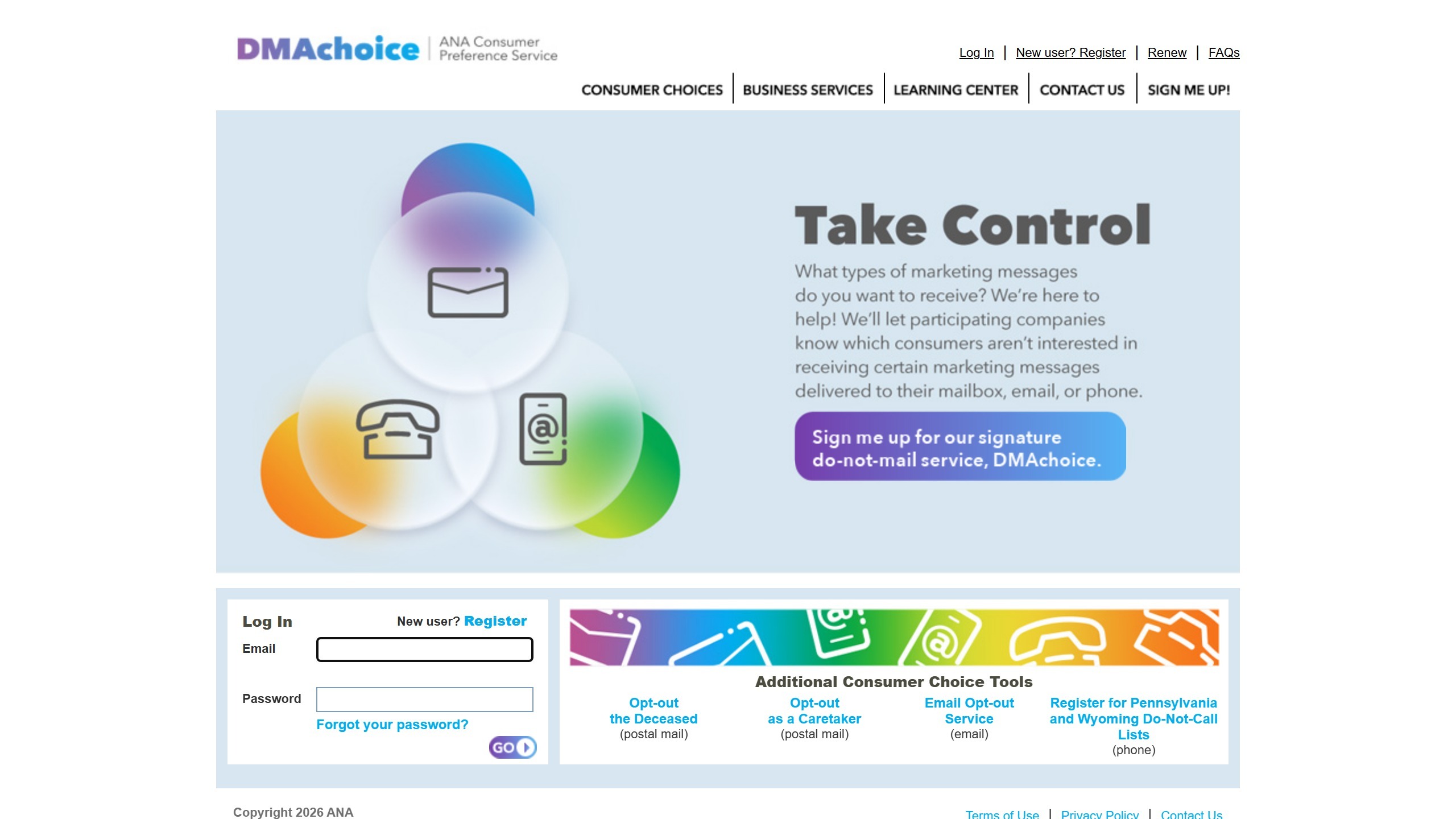
On this page
The Postal Service carried 108.7 billion pieces of mail in fiscal year 2025, and 56.8 billion of them were Marketing Mail. More than half of everything delivered to an American mailbox last year was an advert. Yuck!
DMAchoice is the closest thing there is to a national off switch for what I'd call snail mail spam. It only costs $8, it runs for a full 10 years, and it's owned and operated by the advertising industry. It's also narrower than most people assume, so it's worth knowing which types of junk mail it stops before you pay for it.
$8
One off, paid online.
$9 if you register by post.
- Lasts
- 10 years
- Takes effect
- Allow 90 days
- Covers
Prospect mail only
That's about 80 cents a year, and nothing renews on its own.
Who runs the list, and why that matters
DMAchoice belongs to the Association of National Advertisers, the largest marketing trade body in the United States. The service itself has been running since 1971, back when the ANA was still the Direct Marketing Association, which is where the DMA in the name comes from.
The ANA doesn't sell consumer names and isn't a source of mailing lists itself. It publishes a suppression file that companies check their own mailing lists against before they blast out their junk mail. Unfortunately, checking the list is not a legally mandatory action. In the ANA's own words, companies that don't subscribe to DMAchoice never receive your suppression request at all.
What the $8 buys you and what it doesn't
The ANA splits mail into prospect mail and customer mail. Prospect mail comes from companies you've never bought from and charities you've never given to. Customer mail comes from anyone you've purchased from, subscribed to, or donated to in the past two years. DMAchoice suppresses the first kind and leaves the second kind alone.
The ANA expects registration to cut prospect promotional offers by about 80%. That's their own estimate rather than an independent one, and it's 80% of your prospect mail, not 80% of everything that lands on the mat. However, even 80% of prospect mail is quite a big chunk of junk mail.
Registering is easy and only takes about 5 minutes
- 1
Fill in the form
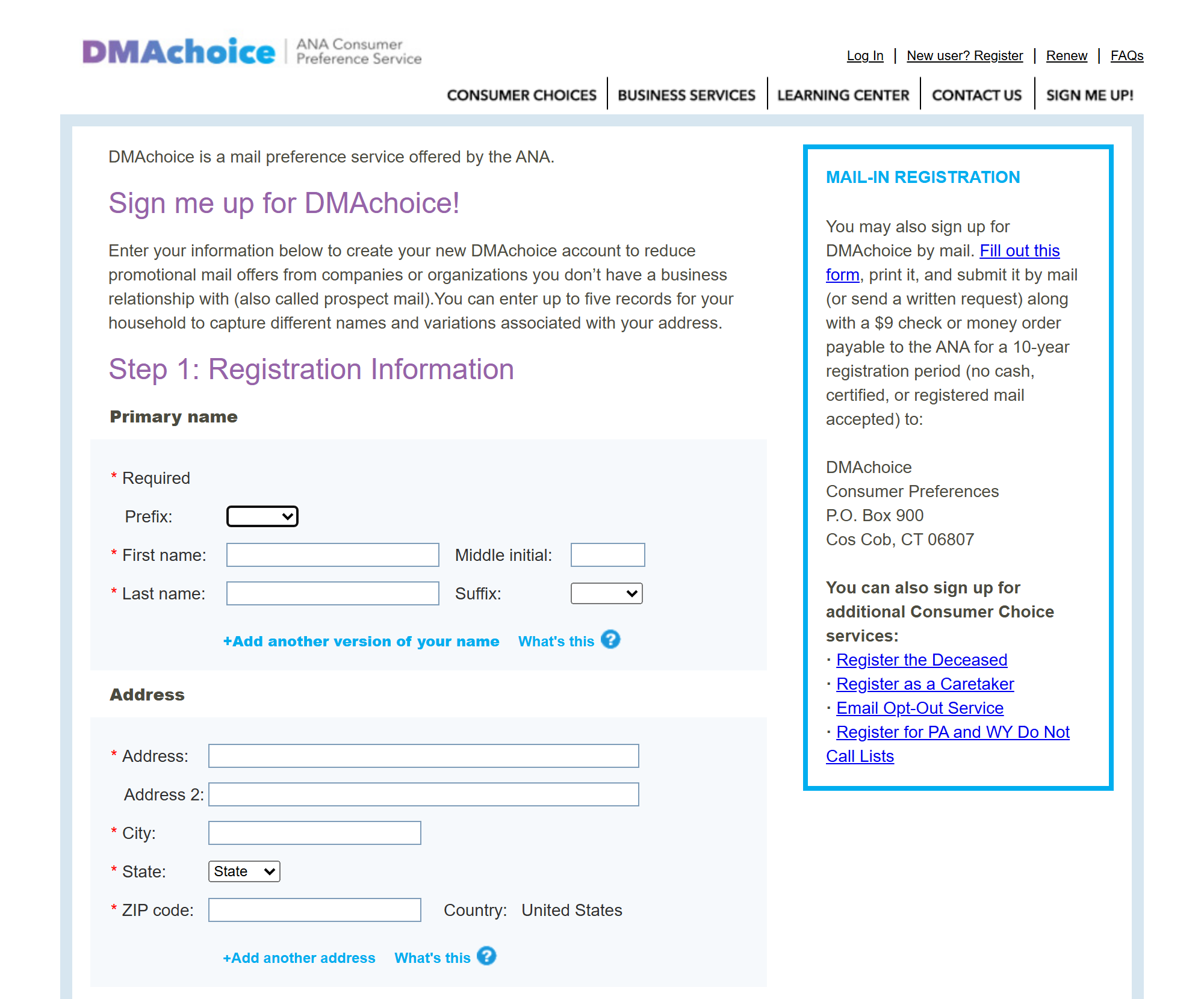
The registration page asks for your name, your postal address, an email address and a password. The email address doubles as your username. You can add up to four extra spellings of your name to catch nicknames, aliases and misspellings, and up to four extra addresses for a second home or a work address.
- 2
Pay the $8
Card or PayPal, one payment, and that covers the full ten-year registration. There's no subscription and nothing renews on its own.
- 3
Give it ninety days
Mail gets planned and printed a long way in advance, so the ANA asks you to allow 90 days before you judge the result. Anything already in the pipeline still arrives.
If you don't want to pay online, there's a snail mail route. Print the form from the registration page and post it with a $9 check or money order made out to the ANA, to DMAchoice, Consumer Preferences, P.O. Box 900, Cos Cob, CT 06807. They don't accept cash, certified mail or registered mail.
Once you're in you can sign back in whenever you like to change your addresses and name variations. Ten years later the registration lapses and you renew it.
Four more helpful lists from the same people
The ANA runs five consumer opt-out tools, and DMAchoice is only the one anybody has heard of. The other four live on a second domain, ims-dm.com, which looks abandoned but is linked from the DMAchoice footer.
Email Preference Service
One personal email address, taken off the lists of US marketers who use the service. It's free and takes about a minute, so there's no good reason to skip it. Submit the address and a verification code arrives by email, and it has to go in within 60 minutes or the address gets dropped from their records again. The ANA is upfront that it won't stop everything, since senders who don't clean their lists against eMPS, business mail at your workplace, and anyone mailing from outside the US all carry on regardless.
Do Not Contact for Caretakers
Register a parent or a relative you look after and their name, address and email go onto the mail and email suppression lists permanently, with no ten-year clock. The form asks how you're related to them, whether you hold power of attorney or legal guardianship, and whether they're in a retirement or nursing facility. Updated files go out to subscribing companies every month, and the ANA expects the mail to thin out within three months.
Deceased Do Not Contact
The same thing for someone who has died, filed by a relative, friend or caregiver. It covers mail, phone and email, it takes a month and year of death, and it never expires.
PA and WY Do Not Call
Telemarketing calls, for Pennsylvania and Wyoming residents only. Both states kept their own do-not-call lists when the national registry launched, and the ANA is the official provider for each. Everyone else goes to the FTC's National Do Not Call Registry, which is free, or calls 1-888-382-1222.
IMPORTANT: Do it in the right order
If you're going to spend an afternoon on this project, do it in the order that clears the most mail for the least amount of money.
- OptOutPrescreen for prescreened credit and insurance offers. It's free, it's run jointly by Equifax, Experian, TransUnion and Innovis, and it's the single biggest category DMAchoice won't touch. Five years online, or permanent if you post the signed form. The phone route is 1-888-567-8688.
- The National Do Not Call Registry for the phone. Free, and it doesn't expire.
- The ANA's Email Preference Service. Free, ten years, about a minute.
- Catalog Choice for individual catalog titles, including the ones DMAchoice writes off as customer mail. Free, run by the nonprofit Story of Stuff Project.
- DMAchoice at $8, for the broad prospect sweep across everything left over.
So, is it worth the $8?
The answer to this question could go either way, depending on how much you value your privacy. For me personally, I think it's a fantastic deal and I am currently enrolled. Eight dollars for ten years works out to just under a dollar a year, and the form takes five minutes.
It's not a national off switch. It's a list the advertising industry keeps and checks by choice, it only reaches companies you have no history with, and it leaves prescreened credit offers, resident mail and political mail exactly where they were. Do the free lists first, because they cover the categories DMAchoice explicitly rules out, then pay the $8 to sweep up what's left.
FAQ
Is DMAchoice legitimate, or is it a scam?
It's legitimate. It's run by the Association of National Advertisers, it's been going since 1971, and the $8 goes to a nonprofit trade body rather than a middleman reselling a free service. The fair criticism here is that the advertising industry is marking its own homework, because checking the suppression file is a decision each company makes for itself.
How much mail will actually stop?
The ANA expects about an 80% drop in prospect promotional offers. That's their estimate, and it only covers prospect mail. Bills, political mail, resident mail and anything from a shop you've used in the past two years all keep coming.
Why does it cost anything at all?
The ANA says the fee covers the administrative cost of running the service, and that it's what pays for your preferences to be held for ten years. It's $8 online and $9 by post, and it's a one-off rather than a subscription.
Can I put my whole household on one account?
Not really. One account holds up to five name variations and five addresses, but those exist for different spellings of your own name and different places you get post. For another adult in the house, the ANA recommends a separate account each.
Does DMAchoice help with CCPA or other state privacy laws?
No, ANA's service is a way to express marketing preferences to participating companies, and states that it isn't a tool for exercising rights under any specific law, including the California Consumer Privacy Act.
What about mail addressed to someone who has died?
Use the Deceased Do Not Contact list, a separate $6 registration a relative, friend or caregiver can file. It's permanent, an updated file goes out to subscribing companies every month, and the ANA expects the mail to fall away within three months.