Meta Employees Protest AI Training Tool That Records Their Mouse Movements
 Dan Saltman6 min read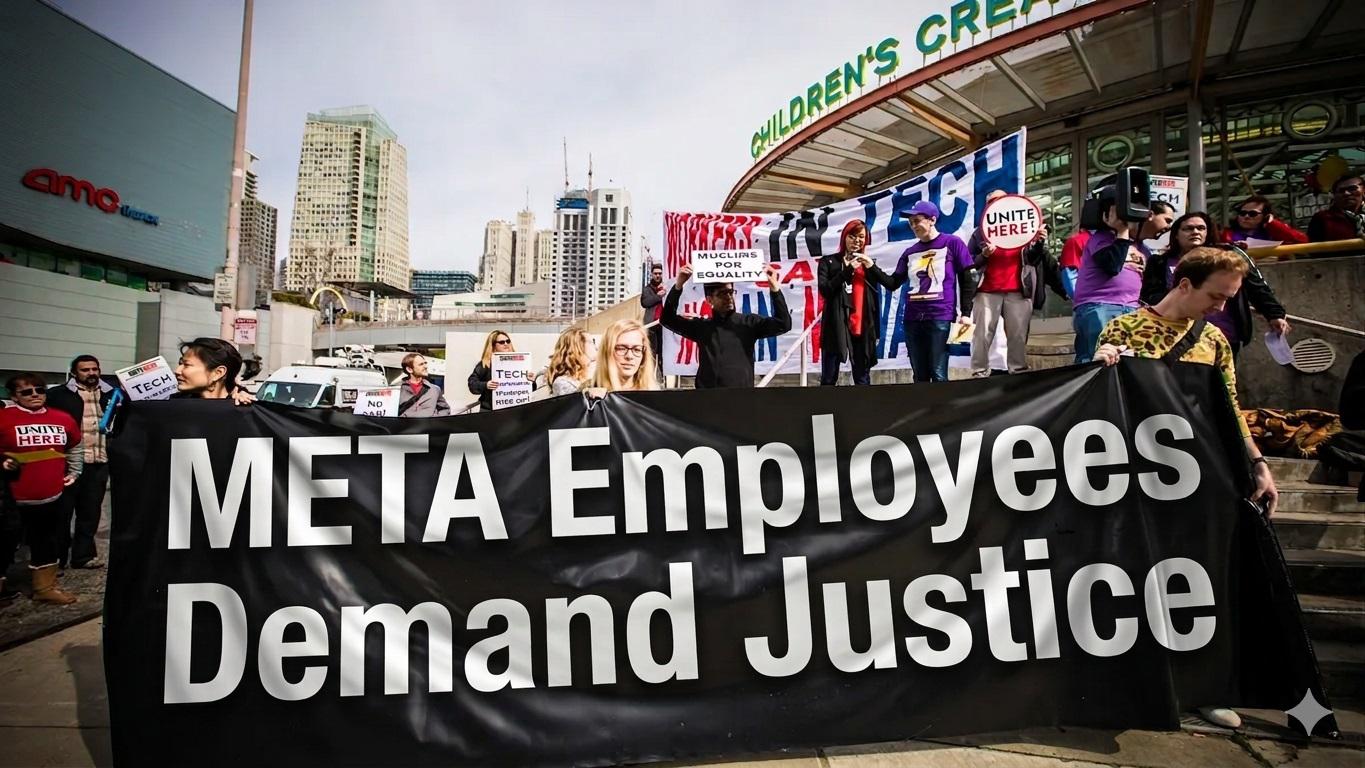
On this page
Meta employees in the United States are pushing back against mouse-tracking software installed on company computers, turning an internal dispute over workplace monitoring into a larger fight over AI, layoffs, and the use of employee behavior as training data.
Employees reportedly distributed flyers across multiple Meta offices, placing them in meeting rooms, near vending machines, and even on top of toilet paper dispensers. The flyers urged workers to sign an online petition opposing the software and opened with the line: “Don’t want to work at the Employee Data Extraction Factory?”
The protest comes shortly before Meta is expected to begin another round of layoffs affecting roughly 10% of its workforce. That timing has made the tracking rollout especially sensitive. Workers are questioning more than why their computer activity is being recorded. They are questioning whether the data they generate at work could help train AI systems that may later automate parts of their jobs.
Meta workers say the tracking software crosses a line
The software reportedly records examples of how employees use their computers, including mouse movements, clicks, and navigation through menus. Meta has defended the program as part of its effort to build AI agents that can help people complete everyday computer-based tasks. The company’s argument is that AI tools designed to operate computers need examples of how people actually use computers.
Employees see a very different risk. To them, the issue goes beyond ordinary monitoring. It is the possibility that their daily work habits, clicks, movements, and navigation patterns are being captured as raw material for AI development while the company is cutting jobs and reorganizing around automation.
Workplace surveillance is becoming a bigger HR problem
That concern is why the Meta dispute has become bigger than one internal software rollout. Across the economy, workplace monitoring has expanded from time clocks and badge readers into screen tracking, productivity analytics, biometric systems, keystroke logs, mouse movement data, and AI-powered management tools. The Meta protest is one example of a broader shift in how employers measure work and how employees experience being measured.
The protest is also being framed as a labor-rights issue
For Meta employees, the industry-wide surveillance debate is now personal. The flyers and petition reportedly cite the National Labor Relations Act, suggesting workers are framing the mouse-tracking rollout as a workplace rights issue rather than a simple complaint about internal software. Under federal labor law, employees have protected rights to discuss working conditions and organize around shared concerns.
That legal framing matters because the protest is about more than what Meta is collecting. It is about whether workers feel free to challenge how monitoring tools are used, especially when those tools are connected to AI development, performance measurement, or future workforce decisions.
The backlash also appears to be part of a wider labor response inside Meta. In the United Kingdom, Meta employees have launched a union drive with United Tech and Allied Workers, a branch of the Communication Workers Union. The campaign uses the name “Leanin.uk,” a pointed reference to former Meta executive Sheryl Sandberg’s book “Lean In.”
United Tech and Allied Workers organizer Eleanor Payne criticized Meta’s AI strategy and workforce cuts, saying employees are facing job losses, surveillance, and the possibility that they are helping train systems that may eventually be used to replace them.
AI makes employee monitoring feel more threatening
The employee backlash highlights a growing workplace issue across the tech sector, where AI development, employee monitoring, and job insecurity are colliding. Companies want real-world behavioral data to train systems that can operate software, complete tasks, and support users.
Workers, meanwhile, are increasingly worried that their own activity is being captured, analyzed, and fed into tools that could weaken their job security.
For Meta, the controversy lands during a major strategic shift toward artificial intelligence. Like other large technology companies, Meta is investing heavily in AI infrastructure, AI assistants, and agent-style tools designed to perform tasks on behalf of users. Those ambitions require training data. But when that data comes from employees’ own computer behavior, the line between product development and workplace surveillance becomes much harder to separate.
The bigger question is trust
For employers experimenting with AI, the dispute raises the practical question of how much transparency is enough.
Meta’s explanation focuses on the technical need for examples of real computer usage. Employees appear to be asking a different question, about who benefits from that data, how it will be used, and what protections exist for the people generating it.
For a company preparing layoffs and reorganizing around AI, expanded employee tracking can feel like part of a much larger system of employee measurement, automation, and control.
The controversy also shows how AI is changing the politics of workplace data. In the past, employee monitoring was often framed around productivity, security, compliance, or remote work oversight. At Meta, the concern is more direct, with workers believing their activity may be used to train AI systems that could reduce the need for human labor.
Whether the protest grows into a broader labor movement inside Meta remains unclear. But the flyers, petition, and UK union campaign suggest a new phase of employee organizing around AI, surveillance, and job security inside one of the world’s most influential technology companies.
For companies racing to build AI tools, the blunt lesson is that employees are worried about more than being watched. They are worried about being converted into training data for the systems that may decide what their jobs look like next.